Because of Him
Feb 06, 2026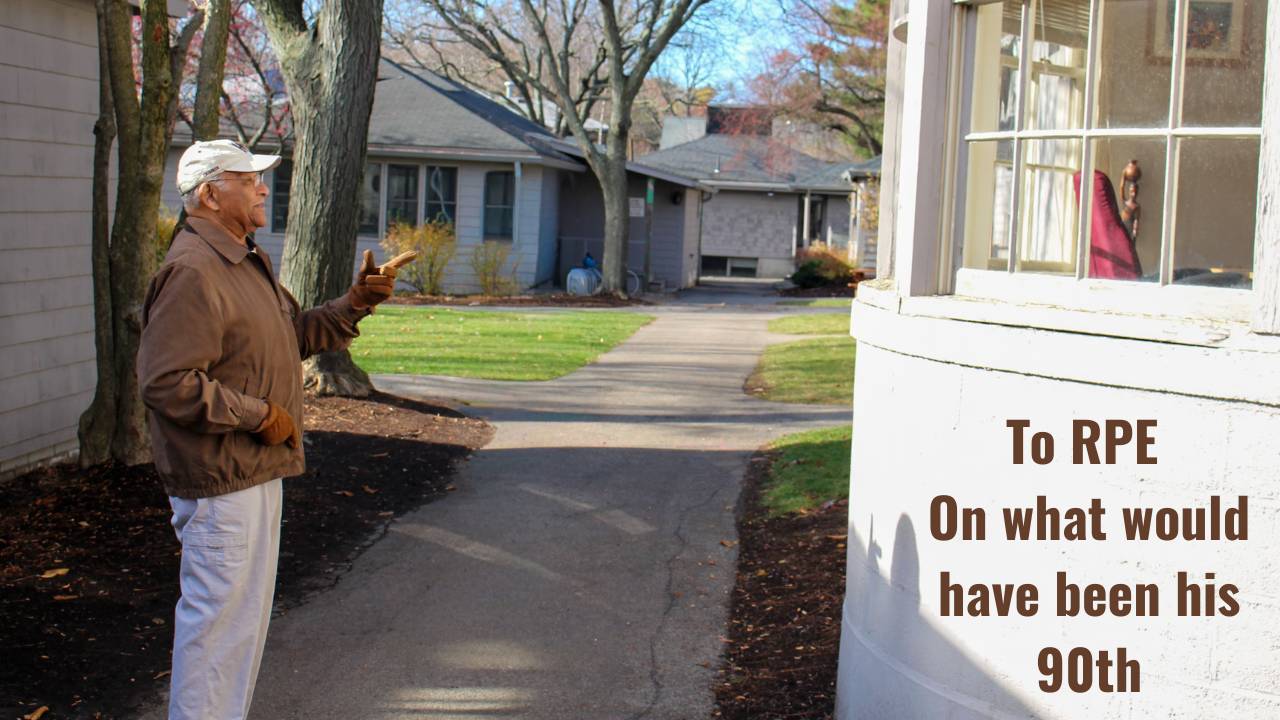
Friday, February 6, 2026 would have been my dad's 90th birthday. The kind of round number that invites reflection whether you want it or not. I have been circling this date for weeks, knowing I wanted to mark it somehow, knowing also whatever I wrote could not be tidy or sentimental in the usual way. Our relationship was never neat. It did not resolve into clean lessons or shared language about feelings. It resolved instead into a shared terrain. The terrain was tennis.
If I trace the line all the way back, everything begins in the late 1960s at Rideout Playground in West Concord, Massachusetts. My dad had taken up tennis as an adult, playing with friends at the local park. I was small, strong for my age, and curious enough to follow him anywhere. Sometimes he took me along. He would hand me a racket and a few balls and let me hit while he played. Mostly, I hit the balls over the fence. Every one of them. Into the bushes. I suspect he knew exactly how this would go. When the last ball disappeared, he would tell me to go find them and then head over to the playground. He returned to his game with his friends. The rhythm repeated itself enough times it now feels like a design choice rather than an accident.
What I remember most is not instruction. He did not coach me. He did not explain grips or footwork or scoring. He created proximity. He allowed me to be near the thing that mattered to him. He let me absorb it from the edges. The sound of the ball. The cadence of adult conversation between points. The seriousness with which they treated a game that was not their profession. I was not being trained. I was being allowed to watch.
After my parents divorced, tennis became the most stable bridge between us. My dad already belonged to the Middlesex Tennis and Swim Club in Lexington, Massachusetts. We called it simply the club. When I moved in with him full-time, he relocated from his one-bedroom bachelor apartment in Waltham to a house on Rangeway Road in Lexington. The house sat roughly half a mile from the club with a path through the woods connecting them. He had a single membership and brought me as a guest when the rules permitted. When it became clear the guest limits could not accommodate how often I was there, he upgraded to a family membership. Tennis stopped being an occasional activity and became an environment. He developed a group of friends he played with regularly. Monday and Wednesday mornings before work in an early bird group started at 6:00 a.m. Saturday afternoon men's round robins. Additional matches layered in wherever schedules allowed. Most of those men became lifelong friends. Long after some of them stopped playing, the friendships endured.
There is a photograph from one of their annual events where they dressed in black tie and did something together that had nothing to do with tennis. The photo matters not because of how they looked, but because of what it represents. The sport was the entry point. The relationships became the outcome. Tennis was the language that introduced them, not the thing that kept them together. One of those friends was the judge at the district court. Through that friendship I managed to get into adulthood without carrying any kind of juvenile record. The fact is offered plainly, not as bravado or confession, but as evidence of how social capital actually works. My dad did not talk about influence. He embodied it quietly. His world intersected with institutions in ways I did not understand at the time but came to appreciate later.
The club became my after school destination. When school activities ended and my dad was not yet home from work, I could walk there through the woods. I became what could only be described as a club rat. I learned how to sit at the front desk and observe. I learned how systems function when no one is paying attention. Eventually, I got my first job there as a maintenance person. I cleaned locker rooms. I vacuumed the facility. Over time, my responsibilities expanded to cleaning the pool filter and cutting the grass.
One winter, the clay court lines heaved from the cold. In Massachusetts, this happens. To put them back down properly, we had to roll the courts to firm them up and then re-lay the lines so they were square to the net. I learned the Pythagorean theorem there. Not in a classroom. On a tennis court. Geometry mattered because the lines had to be right or everything that followed would be off. The math was not abstract. It was functional. It mattered because the court demanded it.
As a kid, I could not beat my dad at anything. Not ping pong in the basement. Not cribbage, which we also played almost daily. Not tennis. Night after night we played ping pong. I would build a lead. Nineteen to thirteen. Twenty to sixteen. And then lose. Twenty one to nineteen. Every time. For a while, I assumed he was letting me get ahead. Later, I realized something more complicated was happening. Early on, he may have been managing the gap. Later, I was managing myself poorly. The choking became mine.
When I finally beat him at ping pong, something shifted. Almost immediately after, I could beat him at tennis as well. Not every time. But regularly. The hierarchy inverted quickly once it broke. He never said anything about it. There was no acknowledgment, no ceremonial passing of a torch. The result was enough.
My dad was my hero in ways that had nothing to do with praise or affirmation. Many of the stories I carry from my youth involve him. A Massachusetts state trooper following us into our driveway and ordering us out of the car at gunpoint. Me being a young teenager and not knowing any better, asking something like whether he was going to go get him. The memory persists not because it was dramatic, but because it captured how little I understood at the time and how much I trusted him.
I never drove my dad's car with his permission. Not once. Not in his entire life. He owned a 1970 Mustang. I took it for a couple of joyrides without permission. None of this converted into trust. He never gave me the keys. He never taught me to drive in it. Later in his life, when he was in the hospital and then skilled nursing for the final months, I flew back and forth to Massachusetts to see him. My stepmother allowed me to use his Volvo XC90 to get to and from the facility. One condition. He could not know. I could not even take the keys out of my pocket until I was clear of his eyesight. Even at the end of his life, the boundary held. It sounds absurd written down. It was also entirely consistent.
Our relationship as adults was strained. There is no benefit in pretending otherwise. We did not talk easily. We did not process things together. We did not resolve old tensions through conversation. What remained intact, though, was tennis. When I became a tennis coach of some note, he paid attention. When I brought players I was coaching to Massachusetts for the Boys 16 National Indoors at Thanksgiving, he wanted to know who they were. In later years, when I came home, we watched tennis on television. Without fail, he would ask whether I was coaching anyone he should be looking for on TV anytime soon. After the day he drove me to cadet basic training, Beast Barracks, I do not believe I slept another night under his roof until sometime in my late fifties. The distance was real and it was sustained. Tennis was his way of staying connected. Not through biography. Through the game.
Last Sunday, I was sitting alone in my home at 3:00 a.m. watching the men's final of the 2026 Australian Open. The hour carries a particular weight for anyone who has ever organized their life around tennis. As I watched, I could not help but think about what it would have meant to plan a trip to see my dad. To wake up at 2:00 a.m. Eastern together. To watch the match side by side as a celebration of his 90th birthday. The thought landed heavily because it was so plausible. It would have made perfect sense. And because it can no longer happen.
I do not know what my dad actually thought of the person I have become. Our relationship did not operate at the level of explicit feedback. He did not offer evaluations. He did not articulate pride or disappointment in words. The uncertainty remains unresolved. What I do know is I owe most of what I am to the chance he gave me. The chance to be near the game. The chance to inhabit an environment where effort mattered. Where precision mattered. Where adults took something seriously without needing external validation.
He did not design a career path for me. He designed access. He showed me, without explanation, that a sport could be a place where friendships endure, where mornings begin early, where geometry matters, where you do not get to win until you have earned it. The architecture has shaped everything I have built since. My way of thinking. My insistence on environments over instructions. My belief that development happens through exposure and repetition rather than speeches. My tolerance for strain and my respect for boundaries.
If there is a through line from Rideout Playground to the club to my life now, it is this. What matters most is not what is said. It is what is made available.
I love my dad. Forever. I miss him terribly. And I am grateful, beyond articulation, for the quiet, imperfect, enduring way he put tennis in my life and then let it do its work.
Never Miss a Moment
Join the mailing list to ensure you stay up to date on all things real.
I hate SPAM too. I'll never sell your information.
