Grateful to See the Exception from the Inside
Dec 12, 2025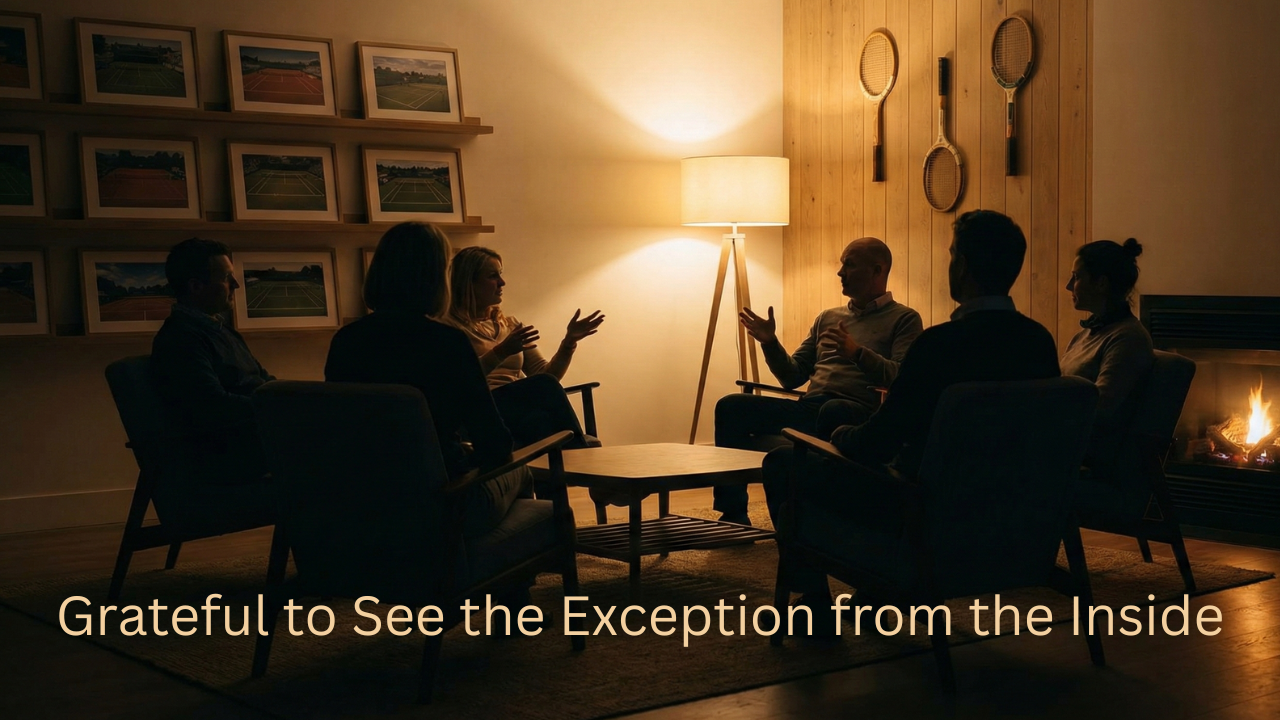
I have spent most of my adult life inside junior tennis. Coached, consulted, directed programs, designed systems, sat with parents during their hardest moments, walked beside players through the emotional arc that separates childhood from adulthood. I have seen the sport from every angle. I have also tried to build what I believe works. At Midcourt Tennis Academy, we pursued systematic parent education, coach accountability, and the kind of collaborative culture that treats families as partners rather than customers. I know what that architecture looks like when it functions. I also know how difficult it is to sustain.
Austin Tennis Academy is one of the places where that architecture actually holds. The more time I spend inside ATA, the more clearly I see how unusual that is. What happens here bears no resemblance to the norm in junior tennis. This is not simply a training center with strong results. This is a community that has engineered itself around clarity, communication, shared responsibility, and an unspoken promise to help young people grow into citizens of significance rather than merely accomplished players.
I did not always understand the depth of what ATA had built. Before 2019, I had suspicions but not evidence. When EKH Media first arrived at ATA that spring, our goal was to capture the academy on film. We interviewed twenty-two people. Coaches, parents, players, alumni. They opened up about their experiences. We expected the dominant themes to center on tennis: training philosophy, competitive pathways, tournament achievements, college placements. All the usual markers that make a program look polished on camera.
What surprised us was not what we found. It was what we did not find. The tennis story was the last story. The first story, the strongest one, was community. Every interview, every memory, every personal account pointed to something deeper than programming or results. The heart of the academy was human connection.
That realization started my education. Watching ATA from the inside over the years since, I have come to see how thoroughly community is woven into the culture here. Two meetings I participated in recently tell that story better than any summary I could write. One was a staff conversation from this week. The other was a parent education session from September featuring two seasoned tennis parents who had walked the entire competitive pathway with their children.
The content of these meetings may seem technical at first glance. Tournament structures. Ranking mechanisms. Scheduling strategy. Beneath the mechanics sits something far more meaningful. Both meetings reveal a culture that treats information as infrastructure. Every coach carries responsibility for clarity. Every parent participates in the learning system. Every player moves through an ecosystem that works in harmony rather than silos.
The staff meeting offered a window into how ATA coaches think when they are not on court. What struck me first was the humility. Coaches questioned their assumptions. They adjusted teaching methods. They reflected openly on where their curriculum needed modification. That openness is uncommon in competitive tennis environments. Most programs hide their internal uncertainties. ATA names them and solves them.
That humility extended into how they think about their role. Jack's statement captured it simply: "Part of our mission is to educate the parents as well as the players." I have spent decades around academies. Many treat parent questions as obstacles or disruptions. At ATA, parent education is not an add-on. It is part of the work. And because they see parent education as central, they have developed a shared language about long-term growth, emotional cycles, tournament transitions, performance states. They understood the difference between temporary dips and structural issues. They expected non-linear development. Setbacks did not surprise them. They saw the journey through a wide lens. That wide lens is what parents around the country spend years wishing for.
What stayed with me most was the protection of joy. When someone asked about a young player's progression, Jack returned the conversation to something more fundamental: "How much fun does he have being part of that group?" Performance is not pursued at the cost of belonging. Joy is not treated as childish. It is treated as fuel.
The September parent meeting revealed the other side of ATA's culture. If the staff meeting showed the academy's intellectual engine, the parent meeting showed its circulatory system. The session covered tournament structures, ranking mechanisms, WTN and UTR comparisons, point decay timelines, the philosophy of losing, doubles selection realities, how to build a match schedule for a twelve-year-old versus a sixteen-year-old, when to choose a higher age division, how to navigate alternates lists, how to advocate for your child without overreaching into the coach's role.
The most striking element was not the information. It was the collaboration. Two parents, Mrs. McEwen and Mrs. Wriedt, were invited as co-educators. Their experience was treated as institutional knowledge. They spoke not as guests but as partners. They talked about the Match Tennis app, how to track points, how to monitor ranking decay, how to schedule tournaments strategically, how to support children emotionally, how to frame losing constructively, how to avoid micromanaging technique. The coaches did not correct them or override them. They amplified them.
I recognized what I was seeing. This is what functional parent integration looks like. This is the model I tried to build at Midcourt. Watching it operate at ATA confirmed something I have believed for years: when an organization commits to treating parents as part of the development architecture rather than external observers, the entire culture shifts.
This is the exception. This is not junior tennis in most places. This is what parents across the country spend years trying to access.
I talk to parents in states far beyond Texas. They describe confusion. Isolation. A constant sense of being one step behind. They do not know which tournaments matter. They do not know why their child's ranking went down. They do not know how to communicate with coaches or how to support their child during emotional cycles. They do not know the unspoken rules of the system. They do not know what losing means or what progress actually looks like. They do not know when to push and when to pull back.
They do not know because nobody teaches them. They do not know because most programs do not believe parent education is part of the job.
When I hear those stories, then sit inside an ATA meeting where coaches discuss development over years instead of weeks, where parents share hard-won experience with generosity, where tournament strategy is broken down step by step, where the emotional reality of losing is spoken about with honesty, the contrast is stark. It reveals how rare this environment is. It shows why ATA produces players who can navigate complexity and families who can withstand the turbulence of the junior tennis journey.
Gratitude becomes easy when the exception is this clear.
I am grateful to see coaches who understand that resilience is not a slogan but a skill built through struggle. I am grateful to see parents who understand that their role is support, not technical intervention. I am grateful to see a program that believes clarity is part of its duty. I am grateful to see a community that treats belonging as a performance variable. I am grateful to see young people learning what it means to become citizens of significance, surrounded by adults who model significance through their actions.
Most parents and players will never see what I see from the inside. They will never hear the debates about how to make competition emotionally sustainable. They will never see coaches adjust curriculum based on tournament observations. They will never hear conversations about how to frame expectations for a nine-year-old versus a sixteen-year-old. They will never witness the quiet work that protects the culture. They will never experience the collective intelligence that emerges when coaches and parents collaborate openly.
This is why I am grateful. Not because the academy is perfect. Not because it gets everything right. I am grateful because I get to see a community executing what I know works, even when the work is complicated. I get to see an environment that refuses to treat parents as outsiders. I get to see a staff that views teaching as a whole-family exercise. I get to see adults who understand that significance is built through service.
Witnessing the exception from the inside is a privilege. Naming it is a responsibility. If we want junior tennis to improve, the lessons learned in these rooms should not stay here. They belong to the wider world. They belong to the parents who do not yet know what questions to ask. They belong to the communities still trying to build what ATA already has. They belong to every family that could benefit from clarity, perspective, and encouragement.
I am grateful to see the exception. I am committed to helping the world learn from it.
Never Miss a Moment
Join the mailing list to ensure you stay up to date on all things real.
I hate SPAM too. I'll never sell your information.
