I Was a Unicorn Founder Forty Years Too Early
Mar 18, 2026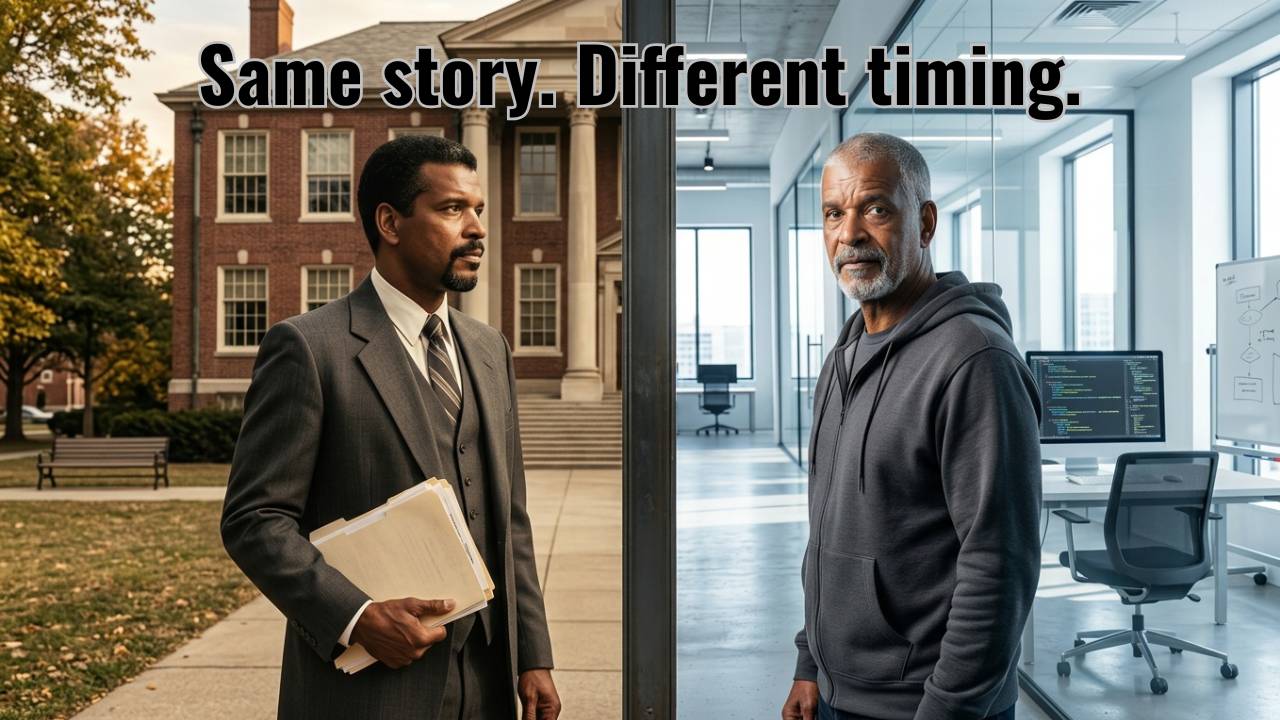
When I was twenty years old, ambition had a very specific dress code.
You did not walk into a room with a big idea and expect anyone to take you seriously without showing your papers first. The sequence was fixed: finish at the right institution, spend years proving yourself inside someone else's system, and then — maybe — someone with capital might listen to what you had in mind. Credentials were not a shortcut to credibility. They were the price of admission. An unfinished degree was not a bold statement about your priorities. It was evidence that you could not finish what you started, and the people writing checks treated it exactly that way.
That was the world in 1982. You qualified first, then you built. In that order, without exception.
Here is where the story takes a turn that I still find remarkable.
Somewhere between then and now, the entire value system inverted. The same act that once disqualified a founder now defines one. Leaving a prestigious institution before graduation is no longer the thing a press release buries in the back paragraphs. It is the opening line. It signals conviction. It signals that the person saw something the institution could not contain, and they chose the idea over the credential. Venture capital does not just tolerate that story anymore. It funds it enthusiastically.
The mythology has specific requirements, though. You cannot drop out of just anywhere. The origin story only works if the institution you left behind was selective enough to have mattered. The story only works because of the tension between extraordinary access and the decision to walk away from it. Without the access, there is no tension. Without the tension, there is no story.
Which is where my own biography starts to get interesting.
I dropped out of West Point.
West Point is one of the most selective institutions in the country. It does not admit people casually. The training is relentless and the academic pressure is real, and the people it produces tend to run things. By the standard the current mythology uses to evaluate early departures from elite institutions, a West Point dropout with an ambitious idea should check every box. The pedigree is there. The decision to leave is there. The decades of deep exposure to a complex problem space are very much there.
There is just one detail that does not fit the template neatly.
I am sixty-four years old.
That one fact runs the same biography through a completely different filter and produces a completely different interpretation. At twenty-two, a West Point dropout building something that does not exist yet looks like a founder. At sixty-four, the same person describing the same mission tends to get a slightly different reception. The question shifts from "what is the upside?" to "why hasn't this been done already?" The credential is the same. The ambition is the same. The only variable that changed is the number on the calendar.
This is the part of the story I find genuinely funny, because what it reveals is not really about age. It is about narrative. We are not evaluating the idea or the person. We are evaluating whether the story fits the shape we already expect.
Young founders are fundable in large part because youth implies a long runway of mistakes that can be reframed as learning before any of them become permanent. There is something appealing about a person who has not yet had enough time to be wrong in ways that matter. What we call vision in a twenty-year-old is sometimes just the structural advantage of not knowing how hard something is. The idea sounds clean because it has not yet encountered reality in any sustained way.
Experience complicates that picture. A person who has spent decades inside a problem space arrives with context that actually makes the pitch more accurate, but that same context raises questions that a first-time founder would never have to answer. Why has no one solved this already? What have you been doing all this time? The longer the track record, the more there is to interrogate, and interrogation feels like skepticism even when it is not.
The bias is not malicious. It is structural. We have built a cultural story around the young founder that makes experience feel like a liability rather than an accelerant. We reward naivety because naivety photographs well.
From where I stand, the story changes again.
The barriers that made the old sequence necessary have come down significantly. When I was twenty, building something real required access to infrastructure, capital, and distribution that was tightly held. You needed someone inside the system to sponsor you before the system would engage with you at all. That gatekeeping is not gone, but the workarounds are now real in a way they were not before. A single person with deep expertise and the right tools can prototype, test, and distribute ideas at a scale that used to require a full organization. The permission structure has shifted. You can start by building now in a way that was simply not available in 1982.
That shift matters more to someone like me than it does to a twenty-two-year-old. A person stepping into this environment for the first time has no accumulated framework to deploy. They have energy and appetite, which are real advantages, but they are starting from scratch on the substance. The decades I spent inside a problem that most people in this conversation have never studied directly are now immediately actionable in a way they were not before the tools existed to act on them. What took years to accumulate can now be put to work in a compressed timeline.
So the more accurate way to frame this is not that I was born in the wrong era or that I missed the window. It is that I arrived at the same starting line by a longer route. The long route happened to include things the short route does not: a real understanding of why the problem is hard, a tested sense of what does and does not work, and enough perspective to know the difference between an idea that sounds interesting and one that actually matters.
The young dropout founder and I are both standing at the beginning of something. The difference is what we each bring to that beginning.
I was a unicorn founder forty years too early. Or I am right on time, finally operating in an environment that matches the way I have always thought. Either reading of the same facts leads to the same conclusion: the ingredients were always there. History just needed a few decades to catch up with the recipe.
Never Miss a Moment
Join the mailing list to ensure you stay up to date on all things real.
I hate SPAM too. I'll never sell your information.
