Part I: Intention
Jan 31, 2026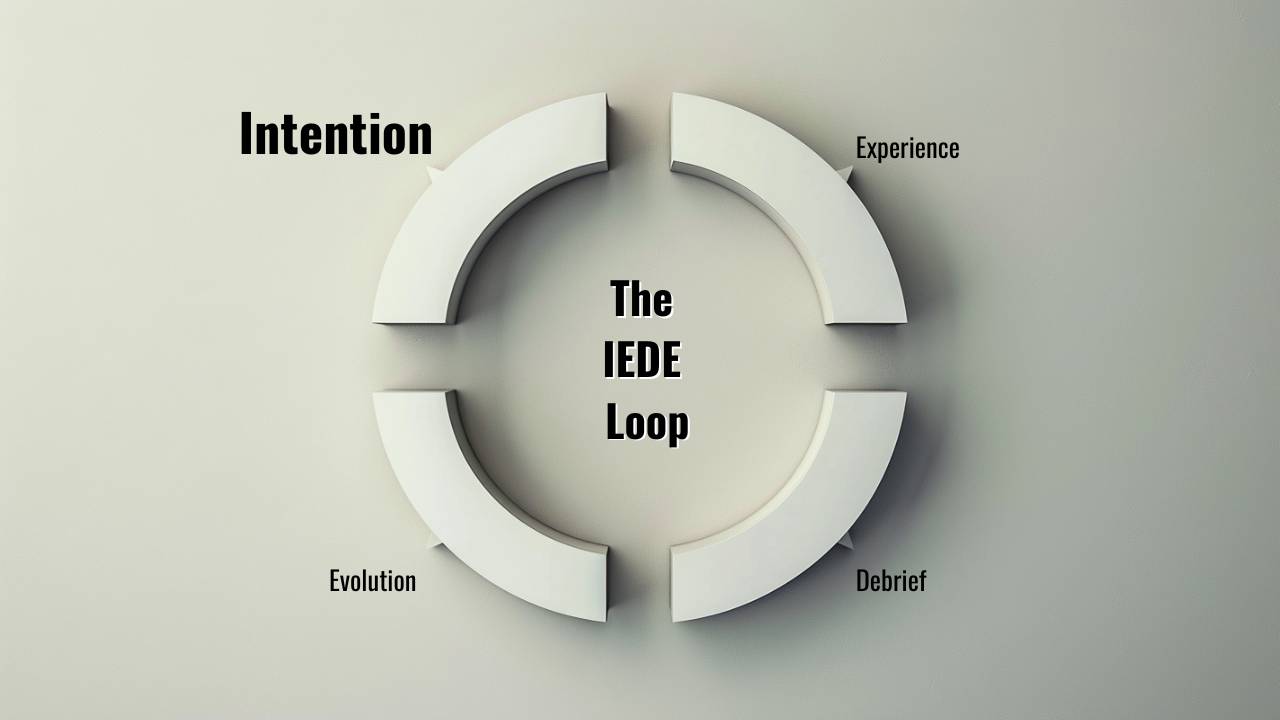
The Question Before the Competition
Most athletes enter competition without knowing why they are there.
They show up. They warm up. They compete. They win or lose. They leave. The event becomes a collection of results, emotions, and scattered memories. Something is supposed to be learned, but most of it stays buried under the noise of outcomes. When the learning does not happen, families assume the problem is effort, coaching, or draw luck. They rarely consider that the real problem began before the first ball was struck.
What follows is the first in a four part series examining the learning loop I use to turn performance into understanding.
After thirty five years of watching athletes develop under pressure, I have learned that growth does not come from competition itself. Growth comes from what the athlete extracts from competition. Some athletes grow reliably. Others plateau despite training harder and competing more. The difference is not talent or work ethic. The difference is whether the athlete enters competition with a clear developmental intention.
I built IEDE to make that extraction from competition visible and deliberate.
IEDE is not a training method. It is not a mental trick. It is a system for converting competitive experience into transferable understanding. Intention. Experience. Debrief. Evolution. Four phases. Each with a distinct role. Each dependent on the one before it. When the loop runs cleanly, development compounds. When any phase breaks down, progress stalls no matter how many tournaments the athlete enters.
Over the next four essays, I will break down each phase of this loop. What it does. Why it matters. How it fails. And what happens when it is protected. Tennis is where the loop first revealed itself to me, but this architecture applies anywhere people perform under pressure and need to grow from that performance.
This first essay examines Intention, the phase that must happen before competition begins.
The Ritual That Changed Everything
For years at Midcourt Tennis Academy I had a practice that confused most new families. Before every training session, I would ask each player the same question. Why are you here today?
The first answer was always generic. To get better. To work on my game. To prepare for my tournament. These answers felt purposeful to the player, but they were functionally empty. They did not tell me what the player was trying to learn. They did not tell me what success would look like. They did not give me a way to measure whether the day mattered.
When a player gave me a generic answer, I stopped the group. Sometimes I used sarcasm. Sometimes I made them run. The delivery was not always optimal, but the underlying principle was sound. A vague intention produces a vague experience. If you cannot articulate why you are here, you cannot extract value from being here.
The group learned quickly. When a new player joined and gave the generic answer, the entire group groaned. They knew what was coming. They understood that clarity was the price of admission. They had learned that training without intention was just motion.
What I did not realize at the time was that I was not teaching a motivational lesson. I was installing the first phase of the IEDE loop. I was teaching them that learning begins before the work begins. Intention is not something you discover during the experience. Intention is the frame you build before the experience starts. Without that frame, the experience becomes noise.
What Intention Is Not
Most people confuse developmental intention with motivation or desire. They hear the word intention and think I want to win or I need to play better or I hope to make the finals. That kind of language feels purposeful, but it is not intention. It is outcome preference.
Outcome preference tells you what the player wants. Developmental intention tells you what the player needs to learn. The two are not the same.
A player can want to win every match while having no idea what winning is supposed to teach them. They can desperately want the trophy while being blind to the developmental work the tournament is revealing. Wanting is easy. Clarity is hard.
Real developmental intention is specific. It names the thing the player is trying to test, refine, or discover through competition. It turns the tournament into a learning instrument instead of a judgment event.
Here is what intention sounds like when it is clear:
I am testing whether I can stay aggressive when the score gets tight.
I am learning how my body responds to three matches in one day.
I am trying to notice when my decision making shifts from proactive to reactive.
I am measuring how quickly I can reset after a bad game.
These are developmental intentions. They are not about the score. They are not about the trophy. They are not about the ranking. They are about using the pressure of competition to reveal something the player could not see in practice. They turn the match into a diagnostic event.
This distinction matters because intention determines what the player notices during the experience. If the player enters the match focused only on winning, they will notice only the score. When the score is good, they feel confident. When the score is bad, they feel anxious. The internal experience remains invisible. The learning stays buried.
If the player enters the match with a clear developmental intention, they notice different things. They notice when their breathing changes. They notice when their decision making narrows. They notice when their body signals stress before their mind registers it. The match becomes data. The result becomes secondary.
Why Most Families Skip This Step
Families skip intention setting because they believe the purpose of competition is self-evident. You compete to win. You compete to improve your ranking. You compete to get recruited. These are not wrong answers. They are incomplete answers. Winning is a result, not a purpose. Ranking is a byproduct, not a goal. Recruitment is an outcome, not a developmental intention.
The most common pattern I see is this. A family enters a tournament hoping for good results. The player wins a few matches and feels great. The player loses in the semifinals and feels terrible. The family leaves and moves immediately to the next event. No one stops to ask what the tournament revealed. No one examines what changed inside the player between the first round and the semifinal. The experience happens, but the learning does not.
This is why plateau happens. The athlete accumulates experience without extracting understanding. They compete more and improve less. They assume the problem is their forehand or their footwork or their mental toughness. They do not realize the problem is upstream. They never set a developmental intention, so they never built the frame that would allow learning to occur.
The Architecture of Intention
Developmental intention has a structure. It is not a motivational speech. It is not a pep talk. It is not a wish. It is a clear, specific statement about what the player is trying to learn through competition.
The structure has three parts.
First, intention names the thing being tested. I am testing my ability to stay calm when the match turns against me. I am testing whether I can execute my patterns when I am physically tired. I am testing how well I read my opponent under pressure. The word testing is critical. It removes judgment. The player is not trying to prove they already have the skill. They are trying to discover whether the skill holds under real conditions.
Second, intention defines what evidence looks like. How will the player know if they succeeded? What will they notice if the thing they are testing is working? What will they feel if it is not? This is where vague intention collapses. If the player cannot describe what success looks like independent of the score, the intention is not clear enough to guide learning.
Third, intention stays visible throughout the experience. The player does not set intention before the match and then forget it the moment the warm up begins. Intention is the lens. It determines what the player pays attention to during the match. It determines what the player notices in the moment. It determines what the player can articulate afterward in the debrief.
When intention is structured this way, competition becomes education. The player enters the tournament knowing exactly what they are there to learn. They compete with awareness, not just effort. They leave the event with data, not just emotions.
The Connection to Debrief
Intention and debrief are two halves of the same process. You cannot debrief what you did not intend to notice. You cannot extract learning from experience if you never defined what you were trying to learn.
This is where most post match conversations fail. A coach asks what happened and the player says I do not know, I just could not get it together. A parent asks how it went and the player says terrible, I lost. These are not debriefs. These are emotional reactions. The debrief never happens because the intention was never set.
When intention is clear, the debrief becomes possible. The player can say I intended to test my ability to stay aggressive in tight situations. In the first set I did. In the second set I started playing safe. I noticed it happening but I could not stop it. That is learning. That is data. That is the beginning of evolution.
The debrief does not require the player to have succeeded. It requires the player to have noticed. Intention makes noticing possible. Without intention, the experience becomes a blur of emotion and result. With intention, the experience becomes a map.
What Happens When Intention Is Missing
When intention is missing, competition becomes a series of judgment events. The player either succeeds or fails. The tournament either goes well or goes poorly. The family either feels good or feels bad. The score determines the meaning.
This is the trap that destroys development. When the score determines the meaning, the player learns to fear competition. Every tournament becomes a test of worth. Every loss becomes evidence of inadequacy. Every win becomes temporary relief. The player stops learning and starts performing. The nervous system treats competition as threat, not opportunity.
The pattern is consistent across thousands of families. The player trains well. The player competes poorly. The family increases training volume. The competition results stay flat or worsen. No one realizes the problem is not effort. The problem is that the player has no developmental intention. They are entering competition to be judged, not to learn. Their nervous system knows the difference.
When intention is clear, competition loses its judgment weight. The player is not there to prove they are good enough. They are there to discover something true about their current capabilities. The match becomes research. Losing stops feeling like failure because the player extracted the data they came for. Winning stops being relief because the player knows the real test was internal, not external.
Teaching Intention
Teaching intention is harder than teaching technique. Technique is visible. Intention is internal. Most coaches and parents try to install intention through speeches or motivational slogans. That does not work. Intention is not inspiration. Intention is architecture.
The method I use is simple. Before every significant training session or competition, I ask the player to answer three questions in writing.
What am I testing today?
How will I know if it is working?
What will I notice if it starts to break down?
The player does not answer these questions out loud in front of the group. They write them down. Writing forces precision. Writing makes vague thinking visible. If the player cannot write a clear answer, they do not have clear intention.
I collect the answers. I do not grade them. I do not judge them. I simply read them so I know what the player is paying attention to. This allows me to guide the debrief later. I can ask the player whether they noticed what they said they would notice. I can ask whether the evidence matched their expectation. I can help them refine their lens.
Over time, the player internalizes the process. They stop needing me to ask the questions. They start asking themselves. Intention becomes automatic. The player enters every competition knowing exactly what they are there to learn. That clarity changes everything downstream.
Why This Matters Beyond Tennis
The failure to set developmental intention is not unique to tennis. It is universal. Students enter school without understanding what they are trying to learn. Employees enter jobs without understanding what they are trying to develop. Leaders enter challenges without understanding what they are trying to discover about themselves.
The result is the same across every domain. People accumulate experience without extracting understanding. They work hard. They try hard. They care deeply. But they plateau because they never built the frame that allows learning to occur.
Intention is that frame. It is the architecture that turns experience into education. It is the lens that turns competition into discovery. It is the structure that makes the debrief possible.
Without intention, the IEDE loop never begins. The athlete competes. The experience happens. But nothing transfers. Nothing compounds. Nothing evolves.
With intention, the loop runs. The experience becomes data. The debrief becomes possible. The evolution becomes visible. The athlete grows not because they competed more, but because they learned more from the competition they entered.
The loop has to start somewhere. It starts here, before the athlete ever steps on the court.
Never Miss a Moment
Join the mailing list to ensure you stay up to date on all things real.
I hate SPAM too. I'll never sell your information.
