Part II: Experience
Feb 01, 2026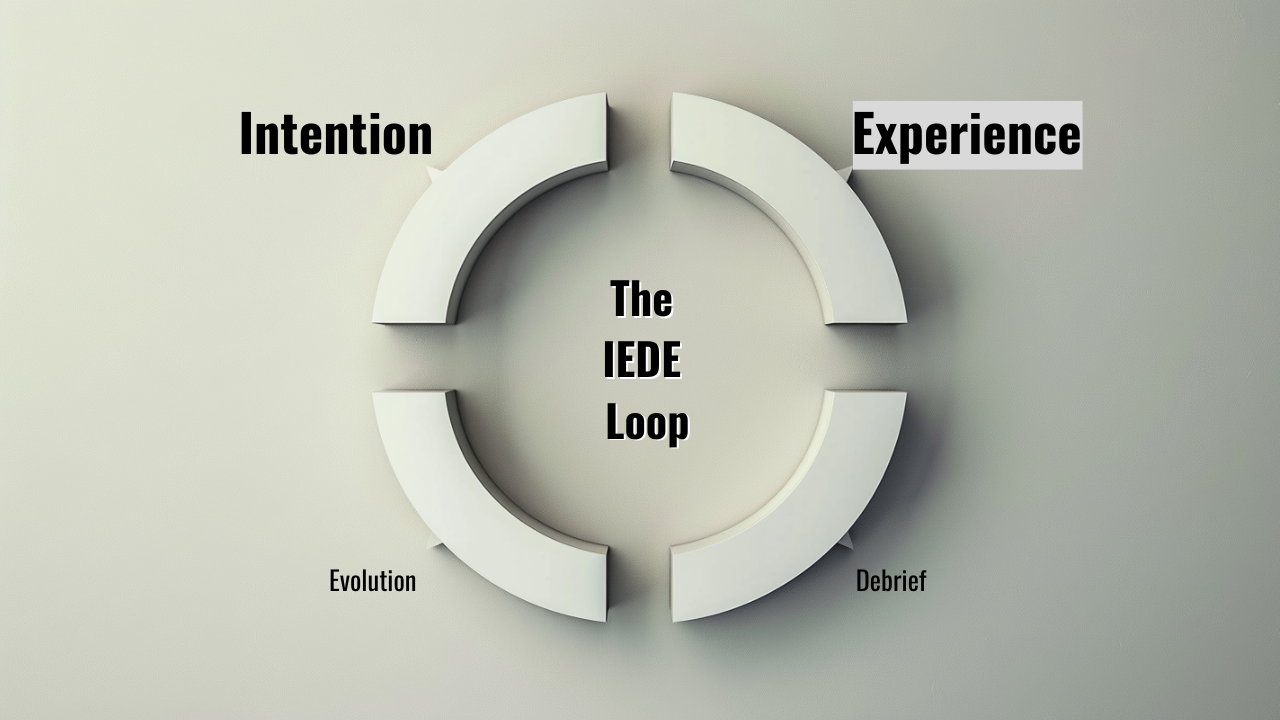
When Pressure Reveals What Practice Cannot
The second phase of the IEDE loop is where intention meets reality. This is where the thing you said you wanted to test actually gets tested. This is where the nervous system responds to conditions practice cannot replicate. This is where truth emerges.
Experience is not about performance. It is about revelation.
Most people treat competition as a place to demonstrate what they have learned in practice. They see the tournament as a stage where skills get displayed and results get earned. That framing makes competition feel like an exam. Pass or fail. Good or bad. Success or disappointment. The score becomes the only signal that matters.
That is the wrong frame. Competition is not a performance venue. Competition is a diagnostic instrument. It creates conditions that reveal what is actually happening inside the athlete. It exposes the gap between what the athlete believes they can do and what they can actually do when pressure arrives. It shows where the internal architecture holds and where it collapses.
This essay examines Experience, the phase where pressure does the work that nothing else can.
What Makes Competition Different
Practice and competition feel similar on the surface. Both involve hitting balls, moving feet, making decisions, executing patterns. But the internal conditions are not the same. The nervous system knows the difference even when the conscious mind does not.
In practice, mistakes have no cost. A bad decision can be reset. A technical error can be corrected immediately. The emotional stakes are low. The body stays loose. The mind stays flexible. Feedback flows cleanly because nothing is on the line.
In competition, mistakes accumulate. A bad decision changes the score. A technical error creates momentum loss. The emotional stakes climb. The body tightens. The mind narrows. Feedback becomes noise because everything feels consequential.
This is not a flaw. This is the design. Competition creates stress that practice cannot manufacture. That stress is not an obstacle to learning. It is the condition that makes learning possible. Stress reveals what is actually true about the athlete's current capabilities. It shows where development is real and where it is theoretical.
The player who executes flawlessly in practice but collapses in competition is not choking. They are revealing that their skills have not yet integrated under pressure. The player who looks shaky in practice but stays composed in competition is not overperforming. They are revealing that their nervous system has learned to regulate stress. Competition does not distort the truth. It exposes it.
This is why the experience phase of the loop is irreplaceable. You cannot simulate competitive stress. You can only enter it and observe what happens.
The Role of Intention During Experience
Intention set before the match determines what the player notices during the match. Without intention, the player notices only score and emotion. With intention, the player notices the internal shifts that matter.
A player who enters competition intending to test their ability to stay aggressive under pressure will notice when that ability starts to fade. They will feel the moment their decision making shifts from proactive to reactive. They will sense the instant their shot selection becomes conservative. That noticing is the data. That is what makes the experience useful.
A player who enters competition focused only on winning will not notice those shifts. They will feel anxiety when the score tightens, but they will not understand why the anxiety arrived. They will sense something changing inside them, but they will not be able to name it. The experience happens, but the data stays invisible.
This is the function of intention. It creates a lens. The player knows what to pay attention to. They know what signal to extract from the noise. The match becomes research instead of judgment.
The player's job during the experience phase has two parts. First, notice when the internal state is changing. Second, attempt to manage that change. Both parts matter. Noticing without intervention is passive observation. Intervention without noticing is blind reaction. The player needs both.
When a player notices their tempo accelerating, they should try to slow it down. When they sense their decision making becoming reactive, they should try to restore proactivity. When they feel their breath shortening, they should try to regulate it. The attempt to manage the state change is not a distraction from learning. It is the learning.
This is where mental toughness gets trained. Tolerance is how much adversity the player can handle before their behavior changes. Fortitude is how far they fall when that threshold gets crossed. Resilience is how quickly they return to baseline after the disruption. Adaptability is whether their baseline after the experience is higher, lower, or the same. All four components are tested and developed during the experience phase.
The player who notices they are collapsing but makes no attempt to recover is not protecting the data. They are surrendering to the pattern. The player who tries to recover and succeeds learns that their interventions work. The player who tries to recover and fails learns what does not work yet. Both outcomes generate useful data. Passive observation generates nothing but documentation of decline.
What the Body Reveals
The nervous system telegraphs stress long before the conscious mind registers it. Breathing shifts. Shoulder tension climbs. Ball bounce tempo speeds up. Gaze patterns change. Posture adjusts. The body broadcasts every signal it can. Most players miss these signals entirely because they are focused on the ball, the opponent, or the score.
I have spent decades standing behind fences watching these signals appear. A player walks to the baseline and their breath shortens by a fraction. Their shoulders rise slightly. Their bounce tempo accelerates. Their head lifts a millisecond early. The breakdown is already happening, but the player does not know it yet. Two points later, the serve misses. The player blames the technique. The technique was not the problem. The state change was the problem.
This is what the experience phase reveals. It shows the exact moment the internal conditions shift. It maps the sequence of signals the body sends before performance collapses. That map is the most valuable data an athlete can collect. It is the architecture of their pressure response.
Most systems ignore this layer entirely. Coaches watch the ball. Parents watch the score. Players watch the opponent. No one watches the internal state. No one tracks the moment the player's breathing changes or their tempo shifts or their shoulders tighten. The data disappears because no one is looking for it.
This is why I am building Court 4. It is a diagnostic environment designed to capture the signals the body sends under stress. It records breath patterns, tempo changes, and movement quality. It isolates the moment performance state shifts. It makes the invisible visible. Court 4 does not replace competition. It extends it. It turns the experience phase into a learning instrument by preserving the data competition generates.
The Difference Between Noticing and Narrating
There is a critical distinction between noticing during the experience and narrating after the experience. Noticing happens in real time. It is the awareness that something is changing. Narrating happens later. It is the explanation of what changed and why.
Most players skip noticing and jump straight to narrating. They finish the match and immediately construct a story. I was nervous. My opponent was playing well. I was not feeling it today. These are narratives. They are interpretations. They are often wrong.
Noticing is different. Noticing is observing the signal without interpreting it. I felt my breath shorten in the third game. My decision making shifted after the first break point. I started rushing between points halfway through the second set. These are observations. They are data. They are almost always accurate.
The player who can notice during the experience collects clean data. The player who only narrates after the experience collects distorted data. The difference determines whether the debrief will be useful.
This is why the experience phase must remain as pure as possible. The player should not be coached during changeovers. The player should not be receiving instruction between points. The player should not be talked to during the match unless absolutely necessary. Every interruption breaks the player's ability to notice. Every piece of advice shifts their attention away from their internal state and toward external correction.
The experience phase is not the time for fixing. It is the time for generating data. The more the player can stay inside their own awareness, the more useful the data will be.
When Experience Fails to Generate Data
The experience phase fails when the player cannot maintain awareness while under stress. This happens in two ways.
The first failure is emotional flooding. The player becomes so overwhelmed by the pressure that their nervous system shuts down higher order thinking. They stop noticing entirely. They react purely on instinct. The match becomes a blur. When it ends, they cannot describe what happened. They remember the score. They remember feeling terrible. They cannot reconstruct the sequence of events or the internal shifts that occurred. The experience happened, but no data was generated.
The second failure is passive observation. The player notices something changing but makes no attempt to manage it. They watch themselves collapse without intervening. They document the decline but do not test whether they can reverse it. When the match ends, they know what went wrong, but they do not know whether they could have recovered. They have data about the collapse. They have no data about their capacity to respond.
Both failures prevent useful learning. The first generates no awareness. The second generates awareness without testing capability. The player needs both. They need to notice the state change and attempt to manage it. The attempt creates the conditions for learning about tolerance, fortitude, resilience, and adaptability. Without the attempt, those components remain untested.
The Relationship Between Stress and Clarity
Stress does not cloud perception. Stress reveals perception. When pressure arrives, the athlete's internal models surface. The beliefs they hold about themselves, their opponent, the situation, and their capabilities all become active. Those beliefs shape what the athlete sees, feels, and does.
A player who believes they always collapse in tight situations will notice evidence of that belief during tight situations. They will feel their body tightening. They will sense their decision making narrowing. They will interpret every signal as confirmation. The belief creates the experience.
A player who believes they can navigate pressure will interpret the same signals differently. They will feel their body adjusting. They will sense their focus sharpening. They will treat the stress as information, not threat. The belief creates a different experience.
The experience phase does not test the player's skills. It tests the player's models. It reveals what the player actually believes when the stakes are real. That revelation is more valuable than any technical feedback. Skills can be trained. Models are harder to change. But models cannot change until they become visible.
This is the core function of the experience phase. It makes internal models visible by putting them under load. The player who enters competition with clear intention can observe their own models in action. They can see which beliefs hold and which beliefs collapse. That observation is the beginning of real development.
Protecting the Experience
The experience phase must be protected from interference. Well meaning coaches, parents, and teammates often try to help during competition. They offer advice. They provide reassurance. They explain what is going wrong. All of this disrupts the player's ability to stay in observation mode.
The best support during competition is silence. Not cold silence. Not detachment. But respectful space. The player needs to know they are not alone, but they also need to know they are trusted to handle the experience on their own. The message should be clear. I am here. You are capable. I will help you make sense of this later.
The impulse to intervene comes from care, but intervention prevents the development of agency. When a parent or coach points out every mistake or offers correction at every changeover, the player learns to wait for external regulation instead of building internal regulation. They learn their own perception cannot be trusted. They learn that figuring things out on their own is not expected. Over time, this creates dependence rather than capability.
The intentional silence is not abandonment. It is a question being asked of the player. Given the chance, will you figure this out on your own? That question is the foundation of agency. Without agency, none of the mental toughness components can develop. The player cannot learn their tolerance threshold if someone interrupts before it appears. They cannot measure their fortitude if someone prevents the fall. They cannot build resilience if someone provides the recovery for them. They cannot develop adaptability if the experience never completes because it was managed by someone else.
This requires restraint. Watching someone you care about struggle under pressure is difficult. The instinct is to intervene. To fix. To rescue. But intervention prevents the data from forming. It prevents the player from learning what they are capable of managing on their own. It prevents the experience phase from doing its work.
The player who is protected from struggle does not develop resilience. The player who is protected from discomfort does not learn to regulate their nervous system. The player who is protected from failure does not learn that failure is survivable. The experience phase is where those lessons happen. They cannot happen anywhere else.
Why Experience Must Come Before Debrief
The experience phase generates the raw material the debrief will process. Without a clean experience, the debrief has nothing to work with. This is why the sequence matters. Intention shapes the experience. Experience generates data. Debrief extracts meaning. Evolution applies the learning.
You cannot skip experience and go straight to debrief. You cannot read about competition and extract the same insight competition provides. You cannot simulate pressure and expect the nervous system to respond the same way. The experience must be real. The stakes must be genuine. The stress must be present.
This is uncomfortable for many families. They want to protect their children from stress. They want to shield them from pressure. They want to reduce the emotional cost of competition. That protection prevents development. Stress is not the enemy. Stress is the teacher. The experience phase is where that teaching happens.
The player who avoids competition because it feels hard is avoiding the only environment that can reveal truth. The player who enters competition but refuses to stay present during difficulty is collecting noise, not data. The player who enters competition with intention and maintains awareness under pressure is running the loop correctly.
The experience phase is not optional. It is not a rite of passage. It is not character building theater. It is the diagnostic instrument that makes everything else possible. Without it, intention is theoretical. Without it, debrief is speculation. Without it, evolution is accidental.
The loop moves forward only when the experience happens and the data gets captured. Everything downstream depends on this phase functioning correctly. The player must enter the arena. They must stay aware under pressure. They must collect the signals their nervous system sends. That collection is the work of the experience phase. Nothing else replaces it.
Never Miss a Moment
Join the mailing list to ensure you stay up to date on all things real.
I hate SPAM too. I'll never sell your information.
