Pressure Is Not the Problem. It Is the Diagnostic.
Feb 27, 2026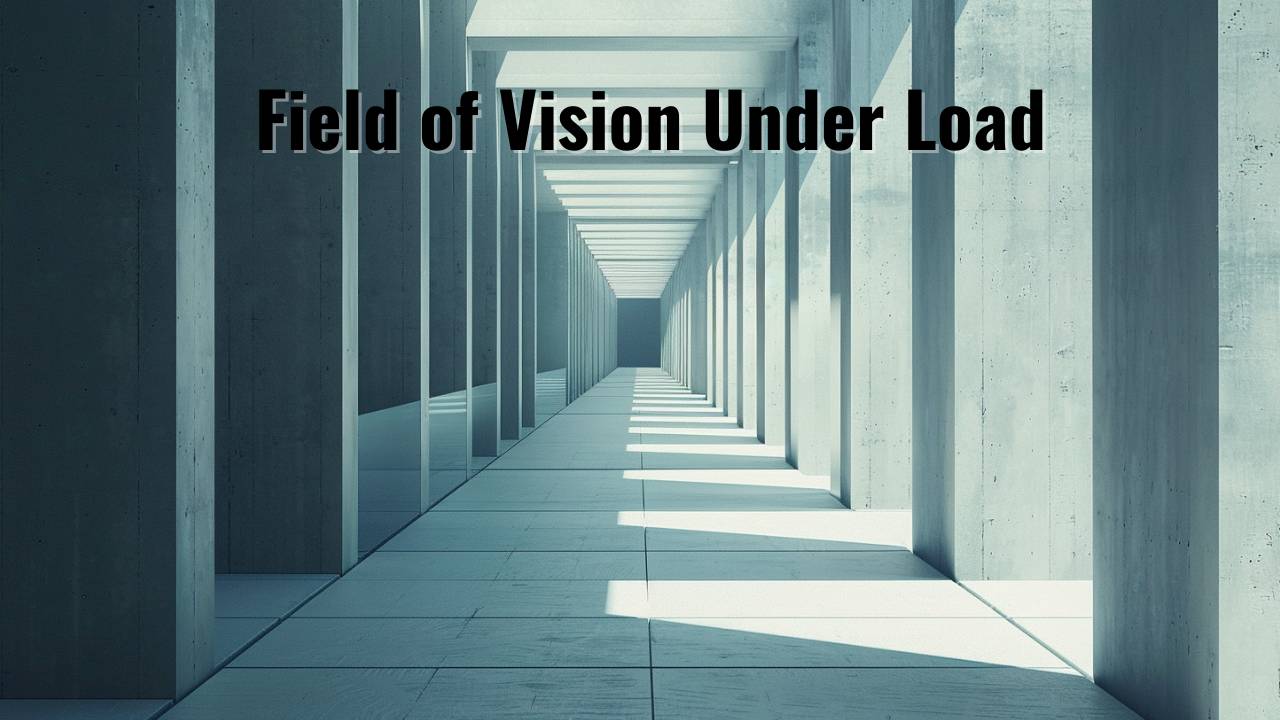
You have likely been told, in one form or another, that pressure is something to manage. Control stress. Regulate emotion. Stay composed. Build resilience. Develop stamina. The assumption underneath that advice is simple: pressure is the obstacle between you and performance. Reduce it, and clarity returns.
That assumption works early in your career because the stakes are small enough that pressure is mostly noise. A tense presentation. A difficult conversation. A tight deadline. These moments test composure, but they do not fundamentally distort perception. You recover quickly. You learn cleanly. Pressure feels episodic. At this level, pressure is structural.
You are responsible for outcomes that unfold slowly and affect people you do not directly control. Your decisions interact with incentives, politics, markets, and personalities in ways that are not fully visible at the moment of choice. The stakes are not just reputational. They are financial, organizational, and sometimes existential. The pressure does not spike and fade. It hums constantly in the background.
Most professionals respond by trying to dampen that hum. They compartmentalize. They rely on process. They increase preparation. They surround themselves with capable people. All of that is useful. None of it changes what pressure is doing internally. Pressure narrows perception.
Under load, you notice fewer variables. You move more quickly to commitment. You interpret ambiguous data through existing frames. You become more confident in the first coherent explanation that appears. This is not weakness. It is human architecture. The brain is designed to reduce uncertainty quickly when stakes rise. The reduction feels like clarity. It often masks distortion.
In elite sport, this effect is visible in seconds. I have watched athletes lose matches not because they lacked skill, but because their read narrowed under pressure and they defended the wrong pattern. Business does not offer replay. The board meeting where you committed to a timeline before understanding the constraint. The reorganization that felt bold but was driven more by discomfort than by data. In the moment, it feels decisive. Later, it becomes difficult to reconstruct what actually drove the choice.
This is why pressure is not the enemy. It is the diagnostic. Pressure reveals where your perception tightens. It exposes which assumptions you defend first and which narratives you reach for automatically. Without pressure, these tendencies remain invisible. With pressure, they surface reliably.
Most leadership systems treat pressure as something to neutralize. High-performance environments treat it as information. In sport, coaches do not remove pressure from elite athletes. They create conditions where pressure can be examined without being denied. After competition, the athlete reconstructs the sequence under load. What did you notice first. What did you ignore. When did you commit. What alternatives were available. The goal is not to eliminate pressure next time. The goal is to widen perception inside it. That distinction changes everything.
If pressure is the problem, you focus on emotional control. If pressure is diagnostic, you focus on perceptual accuracy. Emotional control stabilizes performance temporarily. Perceptual accuracy compounds judgment over time. At your level, performance is rarely the issue. You are competent. You are capable. You are often successful. The deeper question is whether your perception remains accurate as stakes rise.
You can test this quietly. Notice how quickly you feel compelled to provide an answer in ambiguous rooms. Notice how uncomfortable it feels to leave a question open longer than the group expects. Notice which data you instinctively privilege and which you discount. Notice how your tone shifts when your authority is implicitly challenged. These are not character flaws. They are perceptual contractions under load. Pressure is showing you where your system tightens.
In the absence of disciplined reconstruction, those contractions become habits. Over time, they solidify into identity. You begin to describe yourself as decisive, intuitive, bold, cautious, visionary, operational. Those labels feel earned because they have been reinforced repeatedly under pressure. What often goes unexamined is how much of that identity is adaptive distortion rather than calibrated strength.
When a decision feels urgent, that is the moment to ask which variable you may be narrowing prematurely. When you feel unusually certain, that is the moment to ask which ambiguity you may be bypassing. When you feel compelled to stabilize a room quickly, that is the moment to examine whether stabilization is serving perception or protecting comfort. This is not about hesitation. It is about sequence.
Across every environment where consequence is real and feedback is imperfect, learning under pressure follows a predictable structure. When learning compounds, it always begins with clarity about what is being tested, not what is hoped for, but what is actually being examined. Then comes the decision under load. Then comes reconstruction of the sequence before explanation settles. Only after that does behavior reorganize over time. This structure has a name: IEDE. Intention. Experience. Debrief. Evolution.
IEDE is not a framework you apply. It is a description of how learning under pressure works when it works. Intention defines what you are testing. Experience creates the pressure. Debrief separates observation from explanation. Evolution tracks whether perception actually widened. Remove any part of that sequence and pressure will narrow perception faster than it refines it.
When pressure becomes diagnostic rather than threatening, experience begins compounding again. You stop organizing your development around comfort and begin organizing it around exposure followed by reconstruction. The goal is not to perform perfectly under pressure. The goal is to understand how your perception behaves there and to widen it deliberately over time.
If experience stopped teaching automatically, pressure is the clue why. It is not blocking learning. It is revealing the conditions under which learning must now be structured intentionally. Pressure will narrow perception. The only question is whether you widen it deliberately before the next decision.
Never Miss a Moment
Join the mailing list to ensure you stay up to date on all things real.
I hate SPAM too. I'll never sell your information.
