Standing Next to the Future
Dec 13, 2025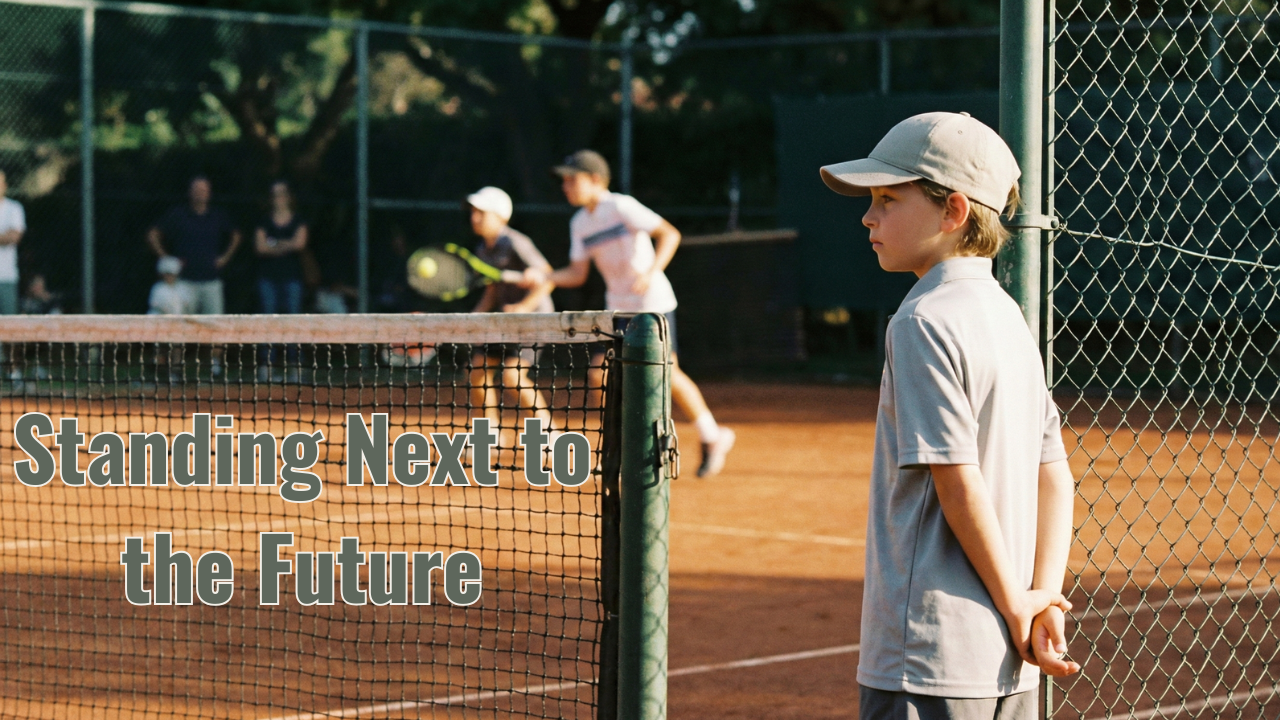
At an INTENNSE junior event in Atlanta, I watched two groups of kids at the same time. On the court were older juniors playing with speed, control, and volatility that only appears once something is genuinely at stake. Momentum shifted in minutes. Decision making tightened. Bodies reacted before minds could keep up.
Just off the court were younger kids serving as ball kids. Close enough to feel the pace of play. Close enough to absorb the behavior between points. Close enough to imagine themselves there without being evaluated in that moment.
Behind them were their parents. Attentive. Curious. Quietly trying to understand what they were looking at. No one was explaining it to them.
Junior tennis loses families not at the top of the pyramid. Not when rankings disappear. Not when scholarships fail to materialize. It happens earlier. It happens at the moment the future becomes visible before the system has explained what it requires.
What Parents Are Actually Saying
I followed up with three parents by phone after the event. Their children were ball kids. They were already investing time and money in junior tennis. They were not beginners. Their kids were competing, training regularly, seeking upward movement.
What surprised me was how consistently confused they were. Not about effort. Not about commitment. About the structure of the journey itself.
One mother told me her son had been playing for seven years. Started with a Wimbledon doubles champion who lived around the corner and hit balls with neighborhood kids. The love of the game took root early. But when I asked if she felt she was getting the mentorship or information she needed to understand the next five years, her answer was immediate. Nobody ever tells a parent that their kid is not going to the US Open tomorrow. But that does not mean they are a bad player. Keep continuing what you are doing. You might have a chance playing for some college. Nobody has ever told me this.
Another parent described her son. Twelve years old. Four UTR. Been playing since 2020. He loves tennis so much one of his coaches said he has never seen a kid who loves being on the court as much as this boy does. But he has a pattern. He constructs beautiful points to reach ad. Then makes the silliest shot selections and loses the ad point. Seven times in a row. The other kid wins one deuce point and closes out the game.
She watched this happen match after match. Her conclusion: I do not even know how to speak to this. I do not know if it is a focus thing, a tired thing, a bored thing. And I do not know how to speak to him about it without making him feel silly.
A third parent described her daughter. Eleven years old. Plays tournaments almost every weekend. Three a month at least. Loves the game. Very competitive. Has played against boys at invitationals and done well. But when I asked what would help, her response echoed the others.
I am going in this blind. I am just trying to do what I think is right. She wants to play. We say you are going to play something. And now she loves it. But I do not know what comes next.
These were not desperate parents. They were engaged parents. They were already deep inside the system. And they were all saying the same thing.
Explain what is happening. Explain what matters. Explain what comes next.
The Moment Nobody Names
Most parents do not enter junior tennis with ambition. They enter with curiosity. A child likes to play. Lessons turn into practices. Practices turn into tournaments. Travel appears. Rankings follow. At first the system feels navigable. Information is incomplete but the stakes are low. Losses are shrugged off. Improvement feels linear enough to trust.
Then parents encounter proximity. They sit next to a court where the level is unmistakably higher. They watch older players move differently, react differently, recover differently. They notice how little time exists between decision and consequence.
One mother put it simply. She said when she met me she knew there was something different. She went home and told her husband: forget whether her son is winning or losing. What matters is that he leaves with a lasting impression. And then she said what I had heard from every parent that day. That factor has been lost.
Parents are standing next to the future and realizing they do not understand the road between where their child is and where those players already are. They do not yet panic. They begin asking quiet questions. What actually separates these kids. What changes between ten and fourteen. Why some players look composed while others unravel. What coaches mean when they say ready. What mistakes are normal and which ones compound.
The system does not answer.
The Cost of Guessing
In the absence of explanation, parents guess. They guess at readiness. They guess at urgency. They guess at priorities. They guess at how much pressure is appropriate. They guess at what to say in the car ride home. Guessing is expensive.
One parent described the trap she had learned to recognize. Other parents were pulling their kids out of school to homeschool them. She could name twenty families who had done it. She thought it was insanity. But without explanation, watching other families accelerate creates pressure to do irrational things.
When no one narrates the journey, every family invents their own story. Some invent panic. Some invent avoidance. Few invent clarity.
Rankings exist. Entry rules exist. Scarcity exists. But no one narrates how those mechanisms are meant to function developmentally. Parents are expected to infer meaning from outcomes. That expectation is brittle.
Why Coaches Cannot Solve This
It is tempting to assign this failure to coaches. Parents repeatedly described coaches as focused on technique when parents are asking about readiness. One mother explained that coaches are back to back with classes. They are not getting involved in the kids' personal stuff. They do not have time.
Another parent put it more directly. The awareness piece is missing. Her son does not realize what he is doing. She can see when he is uncomfortable and starts slicing. He does not notice it. After a match she asks how many forehand slices do you think you did? He says maybe three. She says it was three in every point. And they were not good forehand slices.
The coaches are teaching strokes, patterns, and habits. They are not equipped, incentivized, or given time to explain the full system to every family. When parents ask system questions of coaches, frustration follows on both sides. This is not negligence. It is role misalignment. The problem persists because explanation has no formal home.
The Hidden Power of Ball Kids
Ball kids are not beginners. They are past trying. They are aspiring. They have decided tennis matters. They are watching players they want to become. They are close enough to feel the future without being judged by it.
One parent's son was a ball kid. Twelve years old, four UTR, not yet at the level required for the junior event. But he had ball kidded for over a year. Another parent's daughter was also a ball kid. The ball kidding led to connections she would not have made otherwise.
The children are motivated. The parents are attentive. Neither is yet crushed by scarcity. Nothing in junior tennis is more teachable than this moment. Nothing in junior tennis is more wasted.
What Parents Are Actually Asking For
Across three conversations one request surfaced again and again. Explain what is happening. Explain what matters. Explain what comes next. Not privately. Not emotionally. Not prescriptively. Publicly. Neutrally. Repeatedly. Parents do not want to be told what to do. They want to understand what they are seeing so they can stop guessing. They want relief from being the sole interpreter of a system that never explains itself.
The Systems Communication Failure
Junior tennis does not suffer from a lack of opportunity. It suffers from a systems communication failure. The system exposes families to advanced play before it teaches them how to interpret it.
One parent described her son's pattern. He was up two games. He felt like he was not winning enough. He changed his strategy completely. Lost the set. She asked why. He said he was not winning. She said you won the first two games. How can you say you were not winning? He said I did not even realize. She concluded: How do I train that?
This is a communication failure. Not between parent and child. Between the system and everyone inside it.
Communiplasticity is the correct frame here. Systems must adapt their communication to the learner's position in the journey. Junior tennis does the opposite. It forces families to reverse engineer meaning from results.
Why Public Explanation Changes Everything
When explanation is private, pressure becomes personal. When explanation is public, pressure diffuses.
One parent made this explicit. The accountability piece needs to be somebody other than the parent. If somebody is going to ask about this, the kid will pay attention. But it needs to be somebody like you and not the parent. She understood something fundamental. The parent cannot be the sole source of both emotional support and developmental interpretation. Those roles conflict. The parent who tries to play both becomes a project manager when they never wanted the job.
If the system explains itself out loud while families are watching together, several things change at once. Parents stop guessing. Kids stop being pathologized. Coaches stop absorbing blame. Numbers lose their grip. Time reenters the conversation.
The Role of INTENNSE
INTENNSE did not create this problem. It revealed it. By creating high energy junior environments, INTENNSE made the future visible. Kids want to be there. Parents watch closely.
Randy Jenks described what surprised him most. The kids were genuinely into it. The parents were genuine too. After the first match or two he thought maybe they were just being appreciative. Nice time, beautiful court, good lunch. But after watching several matches he realized the kids could not fake that level of engagement. He was blown away.
INTENNSE is not obligated to explain the system. It should not try. But the signal it creates is powerful. The opportunity is to let that signal be interpreted correctly.
Standing Next to the Future
The most valuable moment in the journey is not when children are trying. It is when they are trying to become something and their parents realize they do not understand the road. That is where explanation belongs. Not later. Not privately. Not after damage is done.
Standing next to the future should feel clarifying. It rarely does.
This is not mentorship. It is literacy.
December 2025
Never Miss a Moment
Join the mailing list to ensure you stay up to date on all things real.
I hate SPAM too. I'll never sell your information.
