The Clearing
Nov 28, 2025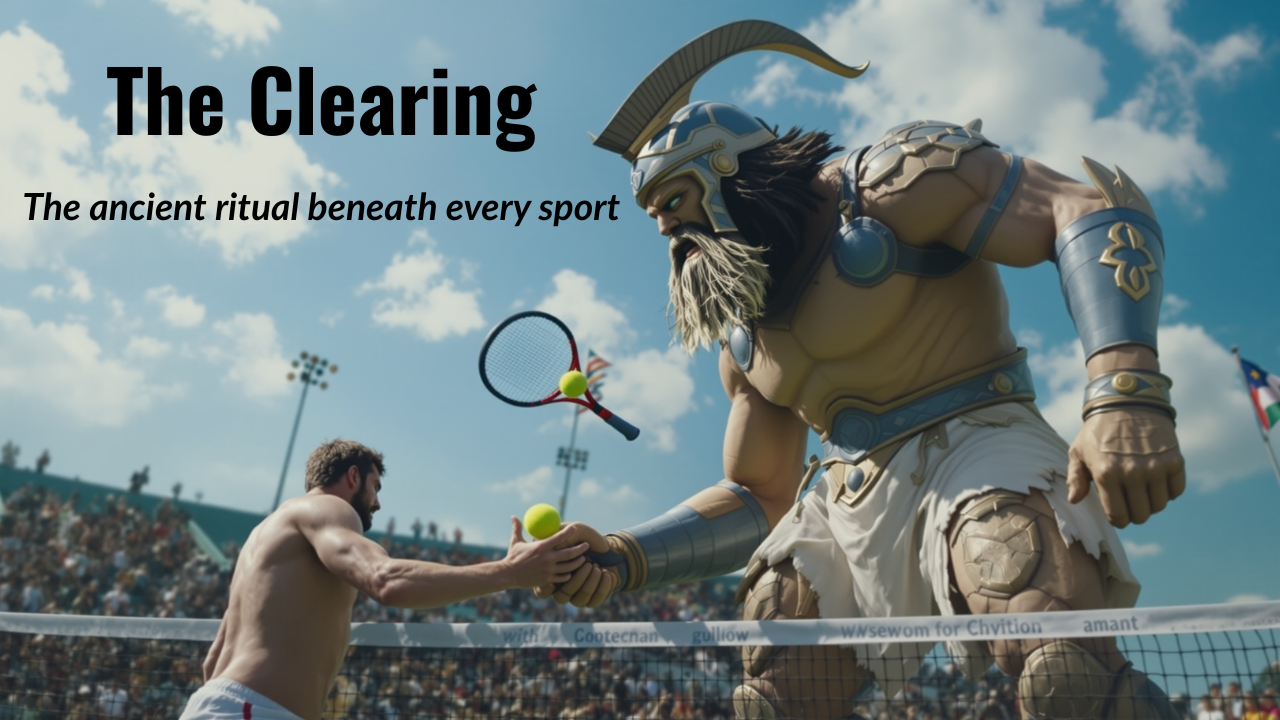
Every culture has a version of this story.
The Hebrews told it as David walking into the valley to face Goliath. The Greeks told it as Achilles stepping out to meet Hector. Other civilizations created their own champions and sent them onto open ground while everyone watched and waited.
The structure never changes. Two sides. One clearing. One person carrying the hopes of many.
We think this story died with the ancient world. It didn't. It changed costumes. Modern sports are the civilized descendants of that same instinct. We still gather to watch someone step forward into uncertainty so we can understand something about ourselves through how they handle the moment.
This is why sports survive every technological shift. AI can simulate games, predict outcomes, generate perfect models. What it cannot do is experience the thing that keeps us watching.
It cannot feel pressure. It cannot doubt itself. It cannot steady its breath. It cannot walk into a moment where the outcome is unknown for everyone involved.
Humans still need that place. Communities still need that place. Young people especially need a place where they can discover who they are when the moment tilts.
I learned this long before I ever coached a junior athlete.
In high school I played football for a coach named Bill Tighe. He understood the deeper purpose of sport without ever putting it into academic language. In our 1978 team book at Lexington High School, he wrote:
High School Football is a game which is played with such skill and intensity that fans, as well as players, cherish victories and mourn losses for a lifetime. This has been true of countless games between gallant old rivals, and no doubt it will always be true for as long as courageous young men play the game. Yet, for all its excitement and memories, there is another reason why schoolboy football is important to the American scene. Success in this game can only be achieved by student-athletes who are dedicated, tough, alert, and self-disciplined. By men who are intelligent and who possess unwavering loyalty to their coach, their teammates, and their community. It is precisely these characteristics that make for success in our competitive society. As well as being vital requirements in the business world, these characteristics take on added importance when related to one's private life and duties of citizenship. Loyalty to one's country and the willingness to voluntarily and actively participate in the civic and charitable affairs are responsibilities of every citizen. Football builds these characteristics.
— William Tighe, Head Coach, Lexington High School
He was right. And the power of that statement extends far beyond football. Every sport that asks young athletes to step into pressure and carry themselves in full view of a community is doing the same ancient work. It is teaching them how to stand forward. How to face a moment. How to organize themselves under stress. How to serve something bigger than their own performance.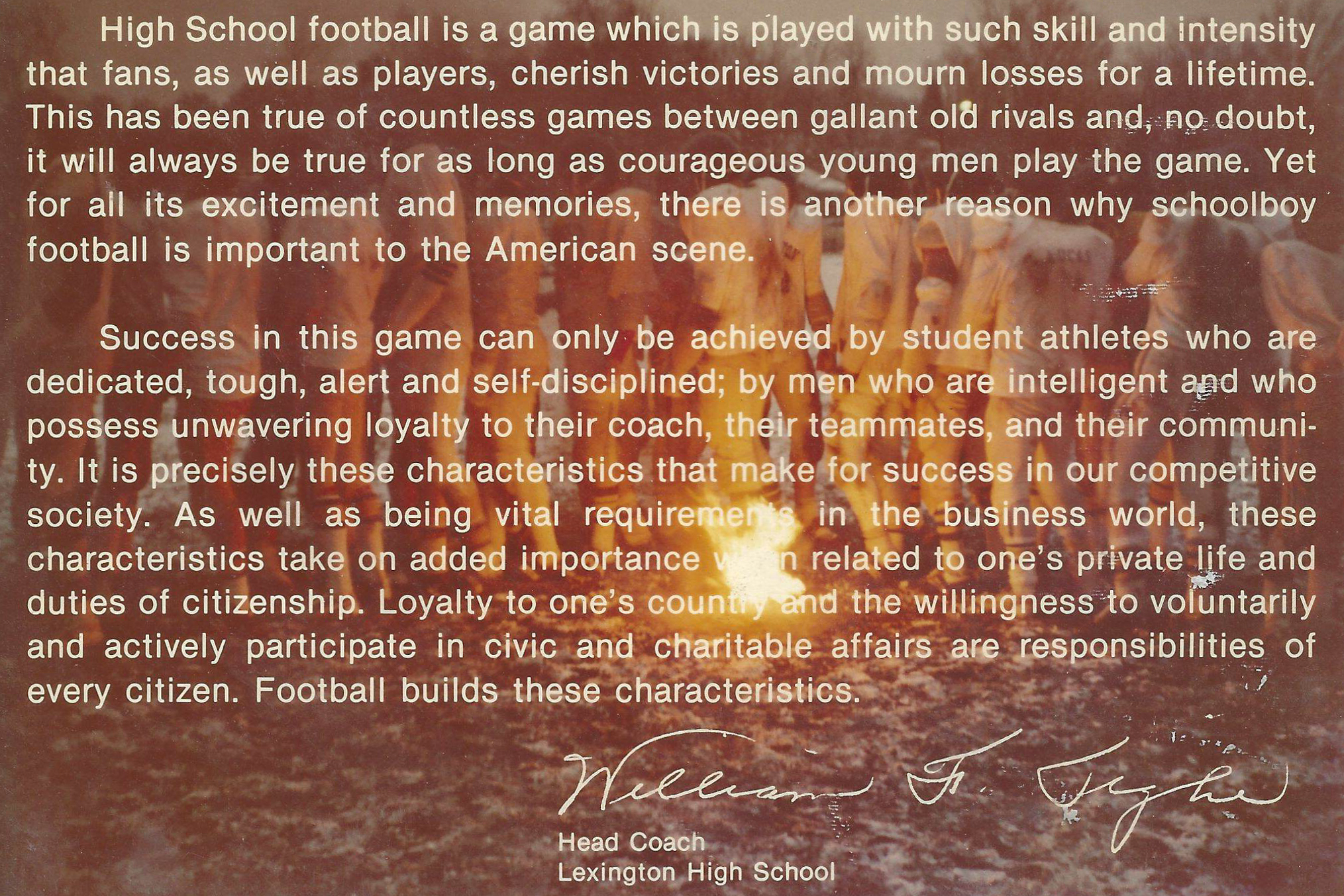
We had a ritual at the end of every season. On the night before Thanksgiving we gathered around a small fire behind the field and conducted the burning of the shoe. Someone tossed in an old cleat and we watched it burn. No one explained the symbolism. We didn't need an explanation. Humans know what ritual means even when they cannot articulate it.
Something was ending. Something else was beginning. We were not the same people who started the season.
That night felt ancient. It felt like the clearing.
That pattern shows up everywhere.
A penalty kick in soccer. A boxer answering the bell for a late round. A wrestler stepping into the circle. A basketball player at the free throw line with no time left. A sprinter in the blocks. A young athlete returning serve on break point.
One person standing forward while others watch with breath held.
The oldest human drama in modern form.
This is why junior sports pull harder on people than most professional matches. Juniors sit closer to the David side of the story. They haven't built the armor yet. Their fear is visible. Their courage is visible. Their problem-solving is visible. When a teenager confronts a moment that feels too big, the emotional voltage is higher than anything a polished adult can produce.
We are watching a person form in real time.
That is what matters. That is what survives.
And that is why the environments we build for young athletes matter. They are not neutral. They shape how athletes encounter pressure. They determine whether the moment becomes traumatic or transformative. They decide how much of themselves the athlete is allowed to understand.
Court 4 exists for this reason. It is a modern clearing. A place where pressure becomes visible and decisions reveal who the athlete is becoming. A place where attention has a pulse and the moment has weight. A place where a young person can confront themselves honestly, without the usual filters.
Founders' Room is where they return to make sense of it. It is where they speak about what happened at the edge of the valley. It is where they turn raw experience into understanding. It is where they reorganize themselves for the next test.
These are not performance tools. They are meaning tools.
They help young athletes see themselves more clearly. They give families a way to witness growth instead of only watching outcomes. They give coaches a way to finally understand what has been invisible for decades.
When you combine these environments into a developmental system, you are not just helping athletes win more matches. You are helping them understand themselves at the deepest level. Some will become professionals. Some will play in college. Some will leave sport with a clarity most adults never reach. None of them walk away empty.
There are no losers in that model. There is no exploitation. There is no zero-sum.
Every participant gains something they will carry long after the scoreboard is forgotten.
In the ancient world, champions carried the fate of the community. In our world they carry something quieter but just as important. They carry awareness. They carry identity. They carry the understanding of how to stand forward in the moments that matter.
Sports survive because they still give people this place. The clearing. The fire. The moment of decision. The chance to see who we are becoming.
That part never changes.
That part is worth building for.
If this work aligns with where your organization is heading, I’m open to serious conversations about partnership and collaboration.
Performance Architect | Founder, Communiplasticity Solutions
📧 [email protected]
📞 469.955.DUEY (3839)
🌐 theperformancearchitect.com
Never Miss a Moment
Join the mailing list to ensure you stay up to date on all things real.
I hate SPAM too. I'll never sell your information.
