The Most Consequential Role We Enter Without Education
Mar 03, 2026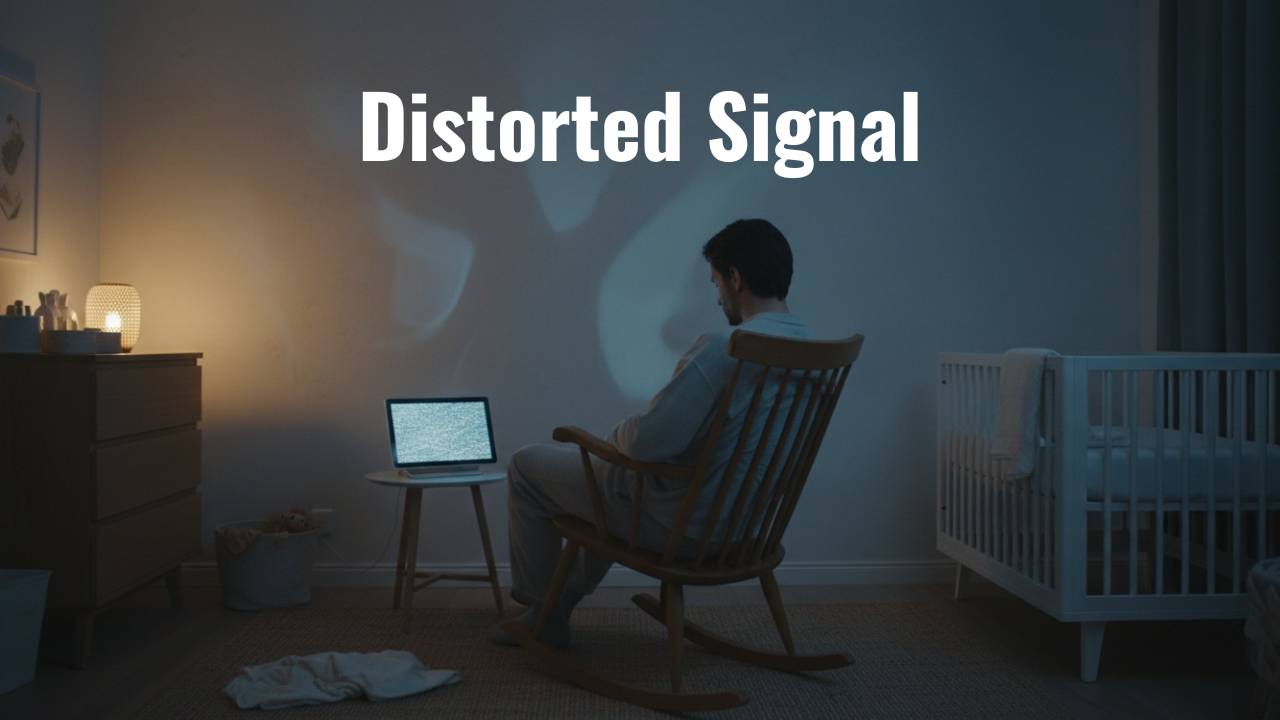
There is a short list of roles that require formal preparation before you are allowed to do them. Driver. Surgeon. Pilot. Electrician. The list is longer than most people assume. Parenting is not on it. We hand a newborn to two exhausted adults, assume instinct will carry the weight, and then act surprised when it doesn't.
Most parents remember the exact moment the weight landed. Not the delivery room, not the first night home, but some ordinary Tuesday at two in the morning when the baby would not stop crying and you had nothing left and you looked at yourself in the bathroom mirror and did not entirely recognize the person looking back. That moment is not a warning sign. It is the job description. Nobody told you that going in.
This is not a judgment about parents. It is a description of a structural gap. The overwhelm that moves in alongside a new child is not evidence that something has gone wrong with the people inside the house. Overwhelm is what happens when experience accumulates faster than the capacity to metabolize it. The gap is not character. It is architecture.
Sleep deprivation alone should stop us in our tracks. Research is clear that impaired sleep degrades executive function, which is the set of cognitive capacities responsible for planning, impulse control, and emotional regulation. These are precisely the tools a new parent needs most. They are the first to go. This is not a complaint about biology. It is a reminder that the environment of early parenthood is specifically designed, by its nature, to compromise the very systems that would help you navigate it. You are being asked to perform at the highest level of your life using equipment that is running on fumes.
At the same time, identity reorganizes. The clinical term for this is matrescence, a concept developed by anthropologist Dana Raphael and later brought forward by reproductive psychiatrist Alexandra Sacks. It describes the developmental passage of becoming a mother, involving hormonal shifts, neurological reorganization, and an entirely new relationship with time and self. The future stops being abstract. A child makes it concrete and urgent in a way nothing else does. Research suggests the brain changes of matrescence are detectable for years. This is not an adjustment period. It is a transformation.
Fathers go through their own version of this, and the culture has almost nothing to say about it. There is no clinical term for the reorganization that happens to a man when he becomes a parent. There is no validated research arc, no permission structure, and very little language for what it actually feels like to have your identity quietly rewritten by something you cannot control and did not fully anticipate. Most men describe the early period of fatherhood as a time when they felt urgently responsible and completely peripheral at the same time. They were needed for function but often excluded from the emotional center of what was happening. The story they told themselves about who they were before, competent, reliable, someone who knew how to handle pressure, suddenly had no clear application. That disorientation is real. It is just invisible. And invisible disruption does not disappear. It finds somewhere else to go.
The reason the structural gap becomes dangerous is that experience in early parenthood arrives fast and without clean signal. In the first essay in this series, the business professional dealt with delayed feedback, where the gap between action and consequence was long enough to let explanation harden before perception could be reconstructed. For new parents, the signal is not delayed. It is distorted. The infant crying at two in the morning is not giving feedback about your competence. Hunger, discomfort, overstimulation, and developmental need all produce the same signal. The parent has to interpret in real time, without sleep, without history, without a reference point. Under those conditions, the first explanation that reduces anxiety wins. Not the accurate one.
This is how experience begins to accumulate without being examined. The mother who snaps at her partner during a sleepless night files the moment as evidence of who she is becoming rather than as data about what sustained deprivation does to any human nervous system. The father who goes quiet during a toddler's meltdown explains himself as not wired for this instead of recognizing a stress threshold that would flatten most people in any context. These are not moral failures. They are what happens when the story forms before the perception has been examined. And once the story forms, it becomes the lens through which every similar moment gets filtered from that point forward.
The compounding is quiet at first. One unexplained reaction does not damage a parent's self-concept. Ten do. Twenty become identity. What started as a response to a specific moment under a specific load gradually transforms into a fixed truth. And because parenting is high-stakes and visible and loaded with cultural expectation, these fixed truths feel important to hold. They reduce uncertainty. They make the unpredictable feel predictable. The cost is emotional distance, rigidity when flexibility is needed most, and a pattern of overcorrection that children learn to read long before they can describe it.
The cultural message that makes this worse is the one that equates difficulty with inadequacy. Parenting platforms present the experience in ways that invite comparison rather than recognition. The exhausted parent scrolling at midnight is not gathering information. They are stacking unprocessed moments against an impossible standard while their nervous system is already in debt. That is experience accumulating in the worst possible way, with the most corrosive framing attached to it. The isolation that follows is real. The shame that grows inside that isolation is real. Most parents carry it quietly because the role is supposed to be the best thing that ever happened to them.
Guilt, which is the primary emotion that emerges from this stacking, is not inherently a problem. When it signals a genuine violation of values, it is useful. It is a calibration tool. When it hardens into identity, it does the opposite. The parent who concludes they are impatient, that they are anxious, that they are simply not built for this, has stopped examining experience and started using it as proof. The loop closes. Learning stops. And no amount of trying harder inside a closed loop produces anything but a more exhausted version of the same pattern.
There is a generational dimension to this that rarely gets named honestly. Children do not only absorb what parents teach them on purpose. They absorb the way adults handle pressure when no one is watching, or when they think no one is watching. The parent who reconstructs a perception before defending a story models something that no lesson plan can replicate. The parent who says out loud, "I handled that wrong and here is what I would do differently," teaches the child something about competence that the child will carry into their own adult life and into their own parenting. That lesson does not come from what parents say in calm moments. It comes from what children watch them do when things go sideways, which in early parenthood is most of the time.
The cultural gap here is not information. Shelves of parenting books exist. Podcasts multiply. Expert advice is available at any hour. What is missing is architecture. Not a list of soothing techniques or boundary frameworks, but a deliberate structure for examining what happened before the story about what happened takes permanent residency. The exhaustion is real. The love underneath it is real. Neither one, by itself, is a method.
Parenthood is the most consequential leadership role most people will ever hold, and it is the one they enter with the least systemic preparation. The patterns installed inside a home during a child's early years shape that child's nervous system regulation, attachment expectations, and fundamental beliefs about whether the world is navigable. These patterns do not disappear when the child leaves the house. They travel with that child everywhere they go for the rest of their life, into every relationship, every workplace, every family they eventually build themselves. Trying harder inside a system that was never designed to help you process what you are living through does not produce judgment. It produces exhaustion dressed up as experience. Most parents already know which one they are carrying.
This essay is part of the "What Experience Doesn't Teach" series, examining how experience shapes — and sometimes distorts — the development of judgment across different domains of life.
Never Miss a Moment
Join the mailing list to ensure you stay up to date on all things real.
I hate SPAM too. I'll never sell your information.
