The Three Kids Every Parent Coaches
Jul 19, 2026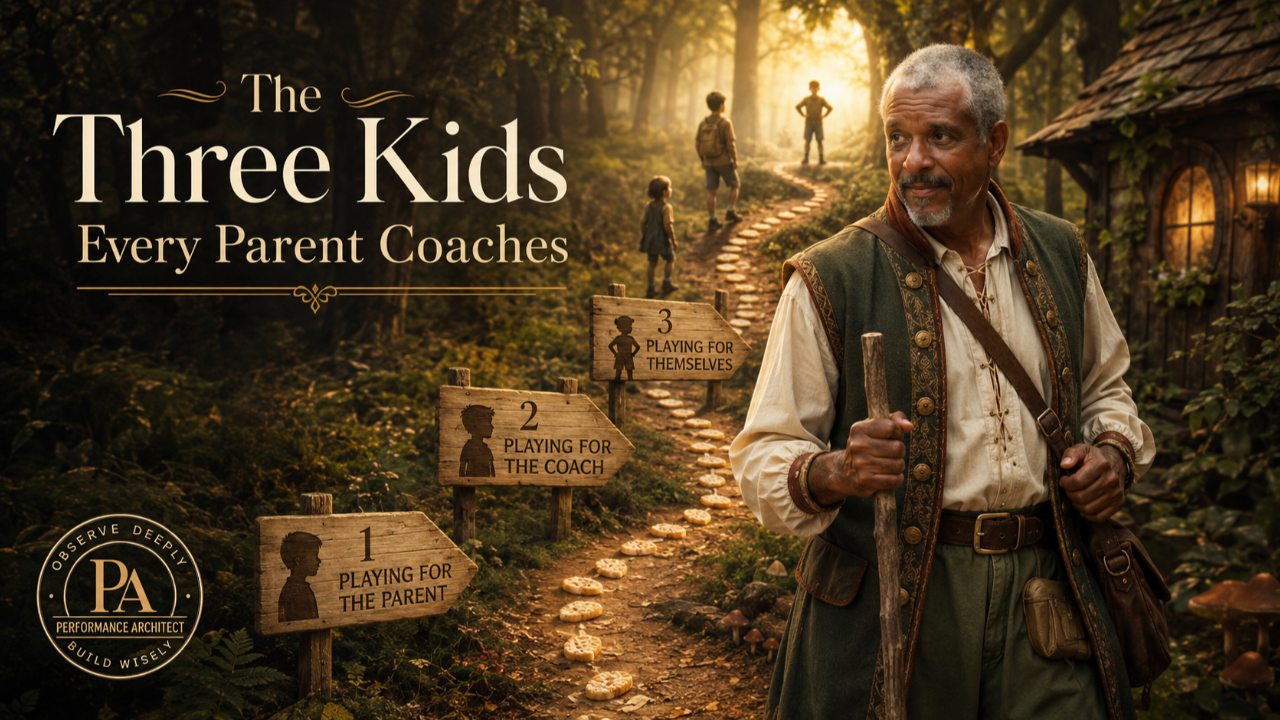
There's an interview in my archive from more than fifteen years ago where I laid out three stages a young tennis player moves through if they stay in the game long enough. First they play for the parent, since the parent is the one driving them to lessons and standing courtside at their first tournaments, so pleasing that parent is the whole game. Then, if the kid gets serious, a coach enters the picture and starts absorbing that same role, and the kid starts playing for the coach instead. Then, if things go the way you hope, there's a third stage where the kid finally takes ownership, playing for themselves or stepping away entirely, but either way the decision finally belongs to them.
I'd opened that interview talking about three postures a parent can take toward all this: pulling the kid along as the parent chases a vision of a high performance player, pushing from behind, or running alongside and stepping in only when it's needed. I still think most parents start out meaning well. They put their kids in plenty of things, some the kid has an aptitude for and some the kid just likes, and that part usually goes fine. It's competition that changes the temperature, because that's when a parent watches their own kid on what I called the battlefield, and the instinct to protect kicks in ahead of the instinct to develop.
There's a line in that transcript I want to sit with again. The hardest part of that sequence isn't the third stage, it's the middle one, because that's where a parent has to hand off influence to someone else while the kid still can't tell the difference between "my coach is coaching me right now" and "my coach doesn't like me." I talked about a specific move for parents stuck in that gap: after a tough match, say "I love you," then walk away, and only later call the coach and ask why the same issue keeps showing up. That's not distance for its own sake. It's putting the accountability where a kid can actually process it, on the coach's shoulders rather than the parent's, which I said is easier for a kid to accept than being held accountable by mom or dad directly. I've never once had a parent tell me I was the best coach in the world but their kid just wouldn't listen to me, so they'd rather pay me to coach somebody else's kid instead. That's not how it works. You hold the coach accountable to connecting with your kid, and when that connection isn't there anymore, you find someone who can build it.
There's also a phase I described that most parents don't see coming. Right around early to mid adolescence, a kid who's been carried along by a parent's momentum will often stop and say, in one way or another, this wasn't me who wanted this. Some push back hard enough that it gets ugly. Some just quietly ride out the resistance because the parent's presence is strong enough to keep them in it anyway, whether or not the kid ever figures out if it was ever theirs to begin with. I said the job at that point is holding the kid to a commitment they made, not one the parent is inventing on the spot, and that the same thing shows up even at the highest level, where a kid playing entirely for themselves still has days they don't want to hit that extra basket of serves. That's what I called taking a kid on a trip to the mirror, asking them to answer to themselves instead of to you, which is the same function a coach or a mentor serves for an adult who already knows what they should be doing but needs someone else to hold the line anyway.
Reread today, none of that is really about tennis. It's about how identity gets built and handed off across a chain of adults, each one relinquishing a little control at exactly the moment somebody else has earned it. Every kid moves through some version of that arc, whether the activity is a sport, an instrument, or a family business three generations deep. The adults who do this well are usually just the ones who know which stage they're standing in and get out of the way on schedule.
Never Miss a Moment
Join the mailing list to ensure you stay up to date on all things real.
I hate SPAM too. I'll never sell your information.
