When the Environment Becomes a Thinking Partner
Mar 18, 2026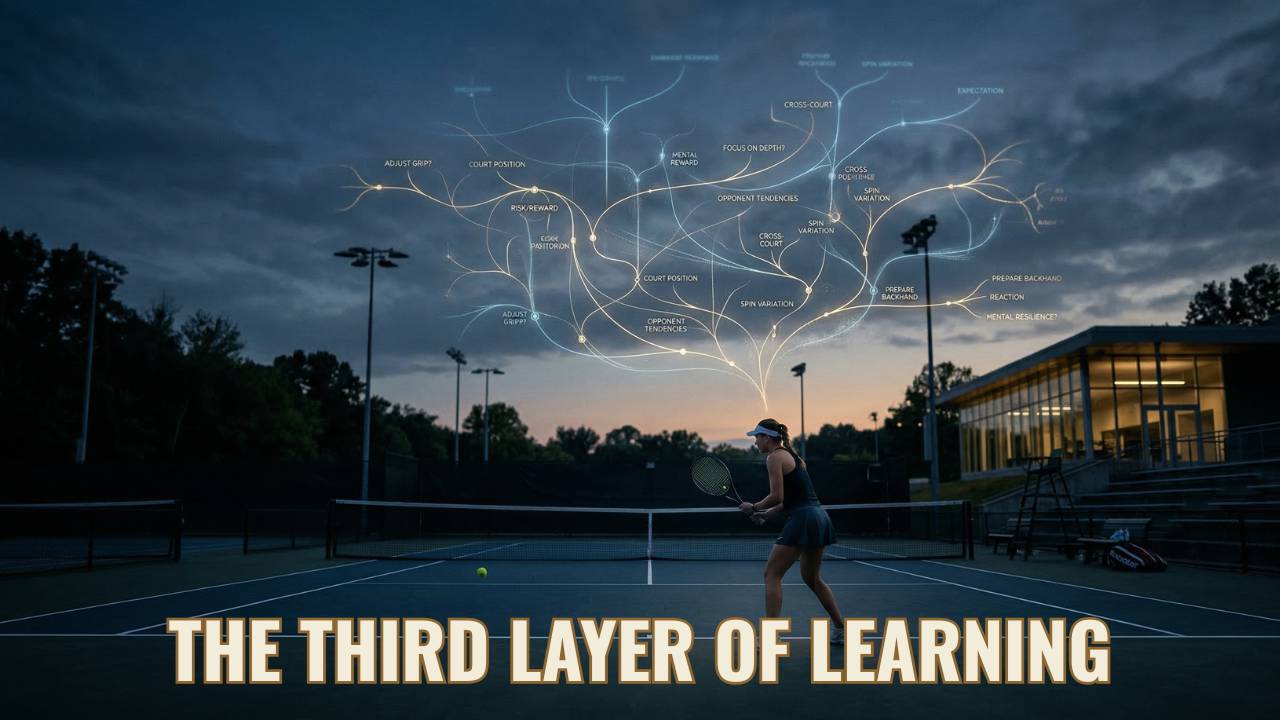
Human to the Power of AI — Essay Eight
The natural assumption when people hear that an environment can become a thinking partner is that they are about to be introduced to a better feedback system. Faster responses. More personalized data. Analytics that catch what human observation misses. That assumption is understandable because most of the conversation about AI in development environments has operated at exactly that level, and better feedback systems are worth building. They are also not what this essay is about.
The shift that matters is not in the speed or volume of information available to a learner. It is in what the environment holds and participates in. A more sophisticated data layer still leaves the interpretive work to individuals. The environment captures what happened. A person decides what it means. That division has defined every development system that exists, and it is the division that is beginning to change.
Consider what a genuinely skilled mentor actually contributes when they are at their best. It is not primarily information. A learner could, in theory, find most of the technical information a mentor possesses somewhere else. What a skilled mentor contributes is a way of reading situations: knowing which details matter in a specific context, recognizing when a learner's confusion signals a gap in understanding versus a gap in experience, identifying the assumption underneath a question rather than simply answering the question that was asked. Those contributions are interpretive, not informational. The mentor participates in how the learner comes to understand the situation, not merely in what the learner knows about it. That interpretive contribution is what produces judgment over time, and it is also what disappears when the mentor is no longer in the room.
Development environments have accumulated enormous stores of information for decades. Practice records, performance metrics, competition history, video footage, written evaluations. The gap was never in data. The gap was always in interpretation: the reasoning that explains why certain decisions were made, which distinctions mattered in specific moments, how experienced practitioners read patterns that novices encountered as isolated events. Data records what occurred. Interpretation explains how the situation was understood by someone with the judgment to understand it. Environments that store only the first layer give learners access to history. Environments that preserve the second layer give learners access to something closer to thinking.
That second layer is what has historically been impossible to preserve. The interpretive structures that shape development exist inside people, transferred gradually through sustained interaction, and fade when interaction ends. Books have always preserved explicit knowledge effectively. The apprenticeship model, whatever its limitations, developed specifically because explicit knowledge was not sufficient. The judgment that transforms experience into expertise requires transmission through relationship, through watching how a skilled practitioner reads a moment and asking questions about what they saw. Apprenticeship persists across domains as stubbornly as it does because no other mechanism has reliably moved interpretive architecture from one generation to the next. The limitation has been that both mechanisms, the book and the apprenticeship, leave the same gap. The book cannot hold tacit knowledge. The apprenticeship cannot hold it beyond the relationship. When the master leaves, the transmission stops.
The possibility that environments can now hold interpretive architecture introduces what is structurally a third layer. Not a replacement for books or for sustained mentorship, but something that the first two layers were never designed to carry. The questioning frameworks that experienced practitioners use to read situations, the distinctions they reach for when standard responses are not adequate, the patterns they recognize across years of encounters with similar moments can now be introduced into a system with enough precision to remain available after the individuals who built them have moved on. The critical distinction is how that architecture enters the environment in the first place. It does not transfer through static documentation, the way a curriculum or a training manual does. It enters through captured interpretive dialogue: the preserved record of how experienced practitioners reasoned through situations in real time, the questions they asked, the alternatives they weighed, the distinctions that shaped their conclusions. That is the mechanism the first two layers never had. The environment begins to hold the reasoning, not just the record.
When that happens, the environment's role in development changes in a specific and concrete way. A learner encountering a difficult situation is no longer limited to the interpretive resources they personally carry or the mentors who happen to be present. The environment can surface the questions that experienced practitioners have historically used to read similar moments. Not as answers, not as directives, but as interpretive scaffolding that extends the learner's capacity to examine what they are actually looking at. The development of judgment has always depended on repeated exposure to better questions. What changes is whether those better questions are available only when the right person happens to be in the room.
This does not flatten the developmental process or manufacture judgment that experience has not yet earned. Interpretation becomes instinctive only through repeated encounters with real situations over time. A learner who has spent two years inside a development environment does not interpret situations the way a practitioner with twenty years does, regardless of the interpretive architecture the environment holds. What the environment's accumulated reasoning does is shorten the distance between exposure and understanding. The learner encounters a situation already surrounded by the distinctions and questions that experienced practitioners have found useful in similar moments. They do not arrive there without guidance and have to wait years before guidance appears.
Over time this changes the relationship between generations of practitioners in a way that has not previously been possible. Traditionally, each generation inherits the activities of the generation before it and rebuilds the interpretive architecture from something closer to scratch. The thinking that made those activities effective does not transfer reliably through observation of the activities themselves. When the interpretive layer begins to accumulate and persist, what each generation inherits changes. They receive not only the structure of the work but the reasoning that shaped it, extended and refined by the generations that built it before them. The mentor still matters. Human relationship remains the environment where judgment actually forms. What the environment adds is continuity of architecture across the transitions that have always caused that architecture to disappear.
The institution does not replace the mentor. It begins to hold what the mentor built.
Designing environments around this possibility requires treating interpretive architecture as something worth preserving deliberately, with the same care that institutions have historically applied to curricula, operational processes, and training progressions. The reasoning behind decisions belongs alongside the decisions themselves. The questions that guided an evaluation belong in the record of the evaluation. The distinctions that experienced practitioners relied on in difficult moments belong in the environment where future practitioners will face similar moments. None of this requires elaborate systems at the outset. It requires the recognition that the thinking behind the work is as worth preserving as the work itself, and then the habit of acting on that recognition consistently enough that the architecture accumulates rather than evaporates.
The real resistance to building that habit will not come from technical limitations. The technology capable of capturing and preserving interpretive dialogue exists. What most institutions lack is the conviction that reasoning is an organizational asset worth archiving in the first place. Institutions are built around preserving outcomes, procedures, and visible activity. Conversations, questions, and the interpretive chains that connect observation to judgment have rarely been treated as legitimate records of work. Until that norm changes, the third layer remains a structural possibility that most environments will not use, not because they cannot, but because they have never been organized around the belief that thinking itself is worth keeping. That is a culture problem. And culture problems are harder to solve than software problems, which is precisely why naming this one clearly matters more than describing the technology that makes the solution available.
The next essay examines where that accumulation becomes most visible, inside the IEDE loop, and what changes when the stages that have always been most fragile finally have structural support.
This is Essay Eight of the Human to the Power of AI series.
Never Miss a Moment
Join the mailing list to ensure you stay up to date on all things real.
I hate SPAM too. I'll never sell your information.
