Why Communiplasticity Solutions Matters to Me
Jan 29, 2026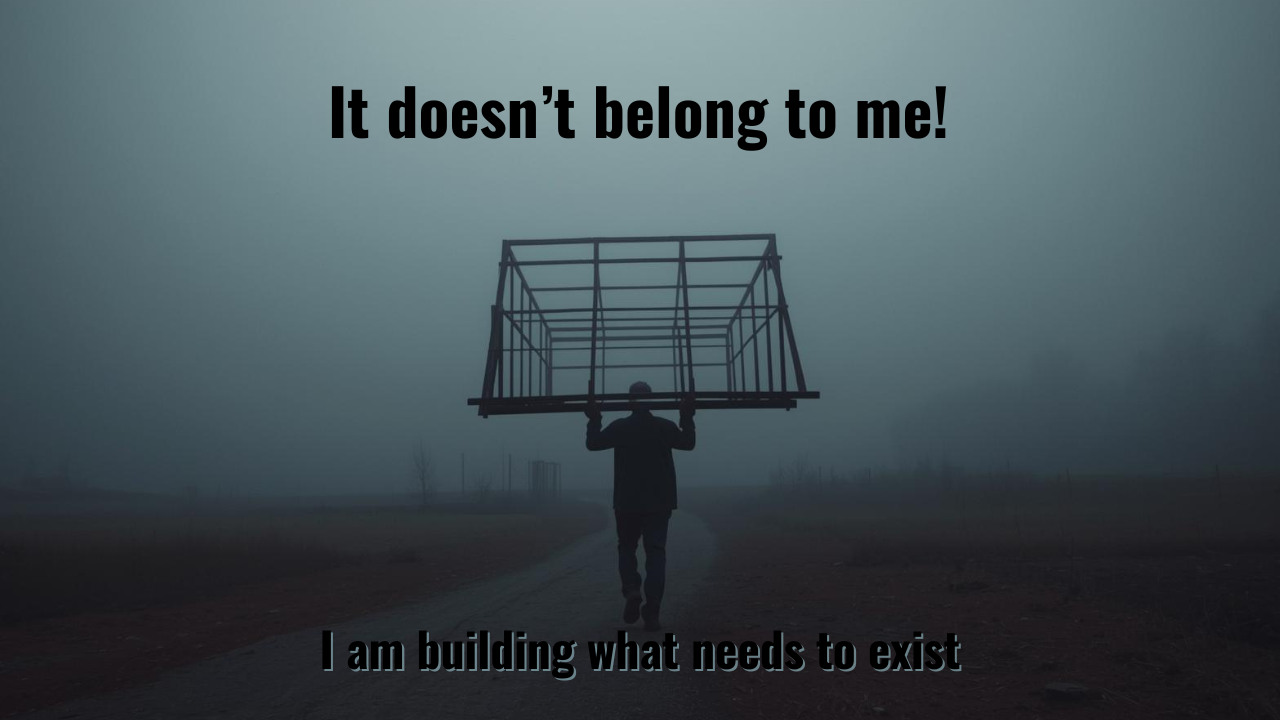
There is a particular kind of weight that comes from carrying something you did not choose to carry but cannot put down. Not because you are stubborn. Not because you need to prove something. Because putting it down means failing something larger than yourself, and that option simply does not exist.
I have been carrying a piece of something too large for any single person to complete. I did not choose this piece. I cannot tell you exactly how large the entire vision is or how many people are carrying their portions. What I know is that my piece is vital, major, and weighs more than professional ambition could ever generate. The work has to get done whether or not the industry is ready to receive it, whether or not it makes financial sense, whether or not anyone validates what I am building before it is complete.
I also know I am not building from isolated insight. My family held significant pieces. My mother coordinating METCO in Concord in the late 1960s and early 1970s, serving as chair of Concord Middle School Guidance Department, breaking down barriers through systematic integration work. My grandfather building successful businesses where systemic barriers were designed to prevent exactly that kind of success. That was their portion of the work, passed forward. Mentors like Coach Tighe in football and Coach Peterson in tennis carried pieces they passed through teaching that went far beyond their sports. Some smaller fragments arrived through clients, co-workers, even casual acquaintances who said something that snapped another piece into place without realizing what they were delivering.
I carry all those pieces forward while I search for the ones still missing. I suspect the other major pieces are searching for me too.
My timeline has been extended twice. A widow maker in 2020 that should have ended everything. A stroke a year ago that could have left me debilitated. Neither did. After the first I misunderstood what I was being shown and doubled down on the wrong thing, trying to share what I knew with a small group of players. That was teaching, not architecture. The second message was clearer. Not punishment but directive. One final opportunity to build what must be built rather than pass forward fragments of what I already know.
I feel lost and yet keep wandering, searching, trying to remain quiet enough to hear and interpret what I am being shown. That posture is not uncertainty about whether the work matters. It is appropriate response when you know you are carrying something vital but do not yet have complete clarity on how all the pieces fit together. My continued presence is evidence the work is not complete. My time is finite and has been extended for a specific purpose.
For thirty-five years that weight has manifested as relentless observation of the same failure pattern repeating across contexts. Players improve technically while becoming more confused strategically. Families invest more resources while growing less certain their choices are helping. Coaches work harder, explain more clearly, adopt better terminology, and still miss what their players are experiencing in real time. The system takes its own motion as proof that everything is working, and because it looks functional from the outside, the deeper questions never get asked.
But something keeps breaking underneath all that apparent progress. It shows up years later when motivation erodes without explanation. When trust between parent and coach thins for reasons no one can articulate. When development stalls despite continued effort, continued investment, continued activity that should be producing results but somehow is not. None of this appears in program reports or social media highlights. It lives in private conversations, in quiet exits from the sport, in families who walk away feeling like they did something wrong when the real problem was systematic all along.
What I have been carrying all these years is not a theory about what might work better. It is architecture for something that must exist. Systems that preserve understanding as it moves through layers of interpretation. Communication that stays adaptive to the learner instead of optimizing for institutional convenience. Structures that force adult thinking to remain accountable to measurable consequence rather than comfortable narrative.
I have seen this failure from nearly every position in the development system. Inside respected programs with pristine facilities and professional staff. Outside those structures on neighborhood courts after dark with equipment in my trunk. In periods where everything was scheduled and budgeted, and in periods where I moved between courts without institutional support. Across all those environments one truth remained constant. The closer I stayed to the lived experience of the player, the clearer the work became. The further the system removed itself from that direct contact, the more its solutions turned brittle.
There were stretches where I felt nearly anonymous. No fixed program, no audience, no institutional narratives to perform. At the time I did not understand why that felt so productive. Looking back the reason is obvious. The feedback loop was clean. Either understanding formed between me and the player or it did not, and there was nowhere to hide from that reality. Communication adapted to what the player was processing or the session failed. No one was translating my work into something more palatable for observers who measured success differently than I did.
When I returned to larger programs with formal structures, I carried that experience with me and it made certain failures impossible to ignore. I could feel when systems started privileging appearances over understanding. When communication was being optimized for external explanation rather than internal adaptation. When adults spent more time talking about players in meetings than calibrating to what those players were actually experiencing on court. None of this came from bad intentions. It came from distance. From layers that quietly inserted themselves between experience and interpretation without anyone acknowledging the cost.
Here is what I know now that I did not know at twenty-five. Some things need to be built whether or not the system is ready to receive them. Not because you want recognition. Not because you think you are smarter than everyone else. Because the work has to get done, and if you are one of the people who can see what needs building, then building it becomes your responsibility whether it makes financial sense or not.
Communiplasticity Solutions is my refusal to accept that scale requires detachment. That solutions must become generic to be useful. That understanding can be cleanly separated from context without losing what matters most. This is not theory I am proposing for consideration. This is architecture I am building because it must exist. Systems that stay adaptive under pressure. Communication that remains tethered to lived experience. Structures that force adult thinking to stay accountable to measurable consequence rather than institutional convenience.
At times this has felt like arguing with a system that rewards motion over calibration. The incentives in junior development favor answers over better questions. They favor structures that look stable even when that stability depends on ignoring what is actually happening between coach and player. Trying to build something quieter, slower, more relational can feel like trying to convince people to notice a crack they would rather paint over and declare fixed.
But here is the thing about carrying something you did not assign to yourself. You do not need the system's permission to do what you were sent to do. You do not need validation from institutions that measure success differently than you do. You need to build what needs building with whatever resources you have access to, protect it until the timing is right, and trust that if the work is real then the infrastructure will eventually catch up to what you already know is true.
In "The Blues Brothers," Jake and Elwood did not stop to explain themselves every time someone questioned their methods. They had a mission, they knew why it mattered, and they kept moving through obstacles with the kind of certainty that only comes from answering to something beyond yourself. That is probably the most accurate description of what this work feels like. Not professional ambition. Not ego. Just forward motion on an assignment that does not become optional because it is difficult.
I have invested everything I have into professional broadcast equipment. I have built assessment systems that capture what the industry typically ignores. I have turned down opportunities that would have been faster money because they would have diluted what I am actually trying to build. None of that makes sense if you are operating from career strategy. It only makes sense if you are stewarding something that came from beyond you and belongs to something larger than you.
Communiplasticity Solutions matters to me because it represents thirty-five years of learning translated into architecture designed to preserve understanding as it moves through systems that typically destroy it. Not because junior development lacks effort or intelligence or resources. Because it lacks structures that refuse to let interpretation drift too far from consequence. Because it needs someone willing to build those structures whether or not the industry is ready to value them yet.
This is not about being right. This is about being unable to walk away from what you were sent to carry. Once you have seen how much understanding lives in proximity, how much judgment forms in conversation rather than instruction, and how easily systems lose signal when they optimize for scale without protecting what matters, you cannot unsee it. You either build in alignment with that reality or you spend your career compensating for it in fragments, knowing your best work happens in gaps between what the system acknowledges.
I am done compensating. I am building what needs to exist. That is the only explanation that matters.
Never Miss a Moment
Join the mailing list to ensure you stay up to date on all things real.
I hate SPAM too. I'll never sell your information.
