Why Experience Is No Longer Teaching You Automatically
Feb 26, 2026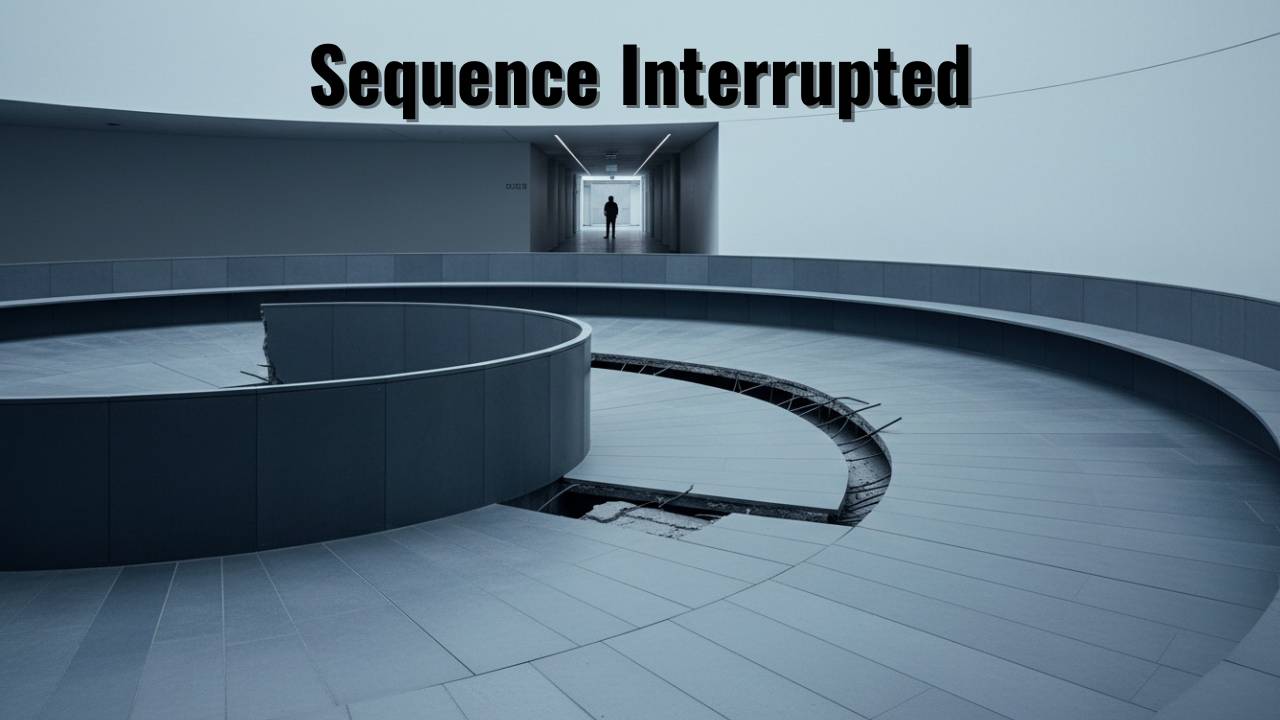
You have accumulated more experience than ever before. More responsibility. More exposure to consequence. More complex decisions that shape other people's work. On paper, that should compound into sharper judgment year after year. Experience is supposed to be the teacher. At a certain level, it stops teaching automatically.
Early in your career, experience corrected you quickly. You made a decision, the result followed closely behind, and the feedback was legible enough to reorganize your understanding. You could feel the cause and effect link tighten. Effort translated into learning because the environment made the relationship visible. Mistakes were inconvenient, but they were instructive. That loop does not scale cleanly.
As your decisions begin unfolding over quarters instead of days, the signal separates from the action that produced it. Outcomes are influenced by variables you cannot fully see and people you do not control. By the time a result becomes visible, the context that shaped the original choice has shifted. Attribution becomes murky. You can explain what happened, but you cannot always trace it cleanly back to perception. This is where the default learning loop begins to fail.
Most professionals assume that learning happens naturally as long as they are reflective and intelligent. They review what happened, extract a lesson, and move forward. That worked earlier because the environment supported it. When feedback was fast and relatively clean, reflection was enough. The mind could reorganize itself without much scaffolding. Under delayed feedback and distorted signal, reflection alone becomes unreliable.
You see this in the way post-mortems operate at higher levels. The analysis sounds thoughtful, lessons are named, action items assigned, yet nothing dramatic breaks and very little reorganizes. The retrospective that produced insights no one could trace to actual decisions. The performance review that felt thorough but changed nothing. The same patterns resurface under the next round of pressure, dressed slightly differently.
The problem is not that you are unwilling to learn. The problem is that the sequence by which learning forms has quietly inverted. Earlier, the sequence looked like this: you acted, you observed, you reconstructed what happened, you adjusted. Each step fed the next because the environment reinforced the connection. Now, the sequence often looks different. You act. You explain. You move on. Explanation replaces reconstruction. Narrative closes the loop before perception has been fully examined. The system rewards coherence more than calibration, so the story becomes the endpoint rather than the beginning of learning.
In elite sport, a defended story can be spotted immediately because the next match exposes the gap. Business is more forgiving. A defended story can survive for months, even be rewarded if it stabilizes a team or reassures stakeholders.
You experience this subtly. You leave a quarterly review convinced that the analysis was rigorous, yet you sense that something important was not fully examined. You can articulate the strategy clearly, yet you feel less certain about the assumptions beneath it. You make adjustments at the margins while the core framing remains untouched. Experience accumulates. Judgment does not compound at the same rate.
At this stage, the danger is not failure. It is stagnation inside competence. You become skilled at operating within existing frames but less practiced at interrogating them. Because nothing collapses dramatically, there is no forcing function to reorganize perception. You are busy, productive, and respected. Learning slows quietly in the background.
In environments where feedback is delayed, distorted, and politically filtered, experience must be processed deliberately or it will default to story. Story is efficient. It creates coherence quickly. It allows you to move forward without re-opening ambiguity. It stabilizes systems, which is why it gets rewarded. It is also incomplete. Judgment forms when perception is examined before it is explained. That distinction matters. Perception is what you noticed in real time. Explanation is what you tell yourself and others afterward. Under pressure, those two collapse into each other. You interpret what you saw through the lens of what feels defensible. The opportunity to refine the read is lost because the narrative hardens first.
The older default assumption was that time itself would teach you. That enough exposure would naturally sharpen judgment. At this level, time amplifies whatever structure you already have. If the structure is loose, you become more fluent in defended narrative. If the structure is disciplined, you become more accurate in perception. This is why experience alone is no longer enough.
If you are still climbing, you cannot rely on the environment to correct you quickly. You must create conditions that allow perception to be reconstructed before explanation settles. Without that discipline, you will continue accumulating situations without metabolizing them fully. The shift is subtle, which is why it is easy to miss. You are not making reckless decisions. You are not ignoring feedback. You are operating competently in complex systems. The gap appears in the distance between experience and recalibration. Over time, that distance determines whether judgment compounds or merely repeats itself more confidently.
The question is no longer whether you are exposed to enough experience. The question is whether you have a structure that forces perception to be examined before narrative takes over.
Never Miss a Moment
Join the mailing list to ensure you stay up to date on all things real.
I hate SPAM too. I'll never sell your information.
