Why This System Exists
Feb 05, 2026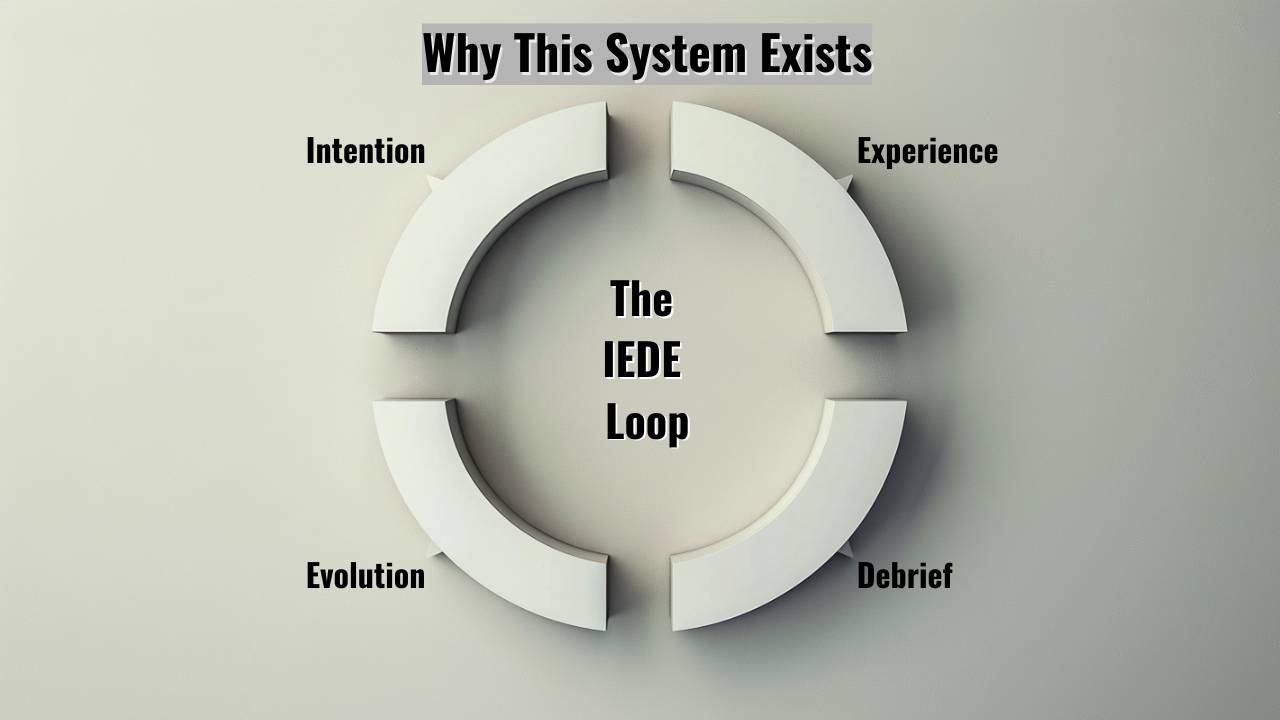
Why This System Exists
A Note Before You Read
Parts I through IV (links at bottom) teach you how IEDE works. You do not need this document to use the loop. You do not need this document to understand intention, experience, debrief, or evolution. If you are a parent, coach, or player trying to apply IEDE, Parts I through IV are sufficient.
This document answers a different question. Not how the system works, but why it had to exist at all. Why it took twenty-four years to develop. Why it produces independent thinkers instead of dependent athletes. Why the architecture is built the way it is.
This is for readers who want to understand the foundation. The lineage. The theory. The evidence base. The moral stance beneath the mechanics.
If you are an institutional partner evaluating whether this system is legitimate, this document provides that evidence. If you are a critic wondering whether IEDE is just repackaged coaching, this document shows you what makes it structurally different. If you are a collaborator trying to understand what problem this actually solves, this document maps the terrain.
You can use IEDE without reading this. But if you want to know why this system exists, keep reading.
Why IEDE Produces Independent Thinkers
The IEDE loop does not exist to make better tennis players. It exists to develop independent critical thinkers who happen to be learning tennis first. This distinction matters more than any technical or tactical outcome the system produces.
Most development systems optimize for short term performance. They train players to execute patterns, follow instructions, and rely on coaches for diagnosis and correction. These systems work when measured by results. But they produce athletes who cannot function without external guidance. The player improves as long as the coach is present. Development stops when the coach is not.
IEDE reverses this dependency. It trains the capacity to observe, interpret, extract insight, and integrate learning without relying on someone else to do the thinking. This capacity transfers across every domain the person will encounter. It is the foundation of agency.
Understanding why IEDE produces this outcome requires understanding the architecture beneath it. The loop is not arbitrary. It maps precisely to how humans actually develop mastery. It is a formalized version of the competency progression every expert has moved through, whether they knew it or not.
The Origin: Charlotte, 2001
The IEDE system began with a simple document. Around 2001, Bob Alexander shared a debrief template with me in Charlotte, North Carolina. I was coaching his children at what would become Midcourt Tennis Academy. The document was straightforward. Questions designed to help young players reflect on their competitive experiences. Nothing elaborate. But it contained the seed of everything that followed.
That template revealed something structural. Not just a tool for post-match conversation, but a pattern that could be developed into something more systematic. Over the next decade in Charlotte, that seed grew into a comprehensive framework for training players to think critically about their own development.
The Charlotte years produced outcomes that would take two decades to fully explain. Players who learned to debrief their experiences, set clear intentions, and extract insight from pressure went on to achieve at the highest levels. Not just in tennis, but across multiple domains simultaneously.
Charlotte Era Outcomes (2001-2010)
The players who came through Midcourt Tennis Academy in Charlotte learned to reflect on their competitive experiences in structured ways. They learned to set intentions before matches. They learned to observe their internal states under pressure. They learned to extract insight from both wins and losses. They learned to measure their development longitudinally rather than match by match.
What made the Charlotte era significant was not the volume of players, but the nature of what they achieved. Thai Kwiatkowski and ReeRee Li are illustrative, not exhaustive, but their trajectories show the pattern clearly.
Thai Kwiatkowski became the 2017 NCAA Men's Singles Champion at the University of Virginia. But that achievement, as extraordinary as it is, does not tell the full story. In the same year he won the national championship, Thai was named Conference Scholar-Athlete of the Year across all sports. Not just tennis. All sports. This is not dual achievement. This is simultaneous elite-level performance in two completely different domains requiring completely different forms of mastery. While competing for a national title, he maintained the academic rigor to be recognized as the top scholar across every athlete in the conference.
ReeRee Li became captain of her team at Yale. Yale does not admit good tennis players who happen to be smart. Yale admits independent thinkers who can operate at the highest academic level while also leading athletic programs. Team captaincy at an Ivy League institution is not a popularity contest. It is a recognition of leadership, judgment, and the capacity to guide others through pressure.
There were others. Many others. But Thai and ReeRee illustrate the pattern clearly. The system that emerged from Bob Alexander's simple debrief document in 2001 did not just produce tennis players. It produced people who could think critically under pressure, set clear intentions in complex environments, extract insight from experience, and apply learning across completely different domains.
These outcomes preceded any formal theory. They preceded the competency wheel. They preceded the Learning Zone framework. They were the evidence that something structural was happening beneath the practice. The question was: what made it work?
The Operational Framework That Came First
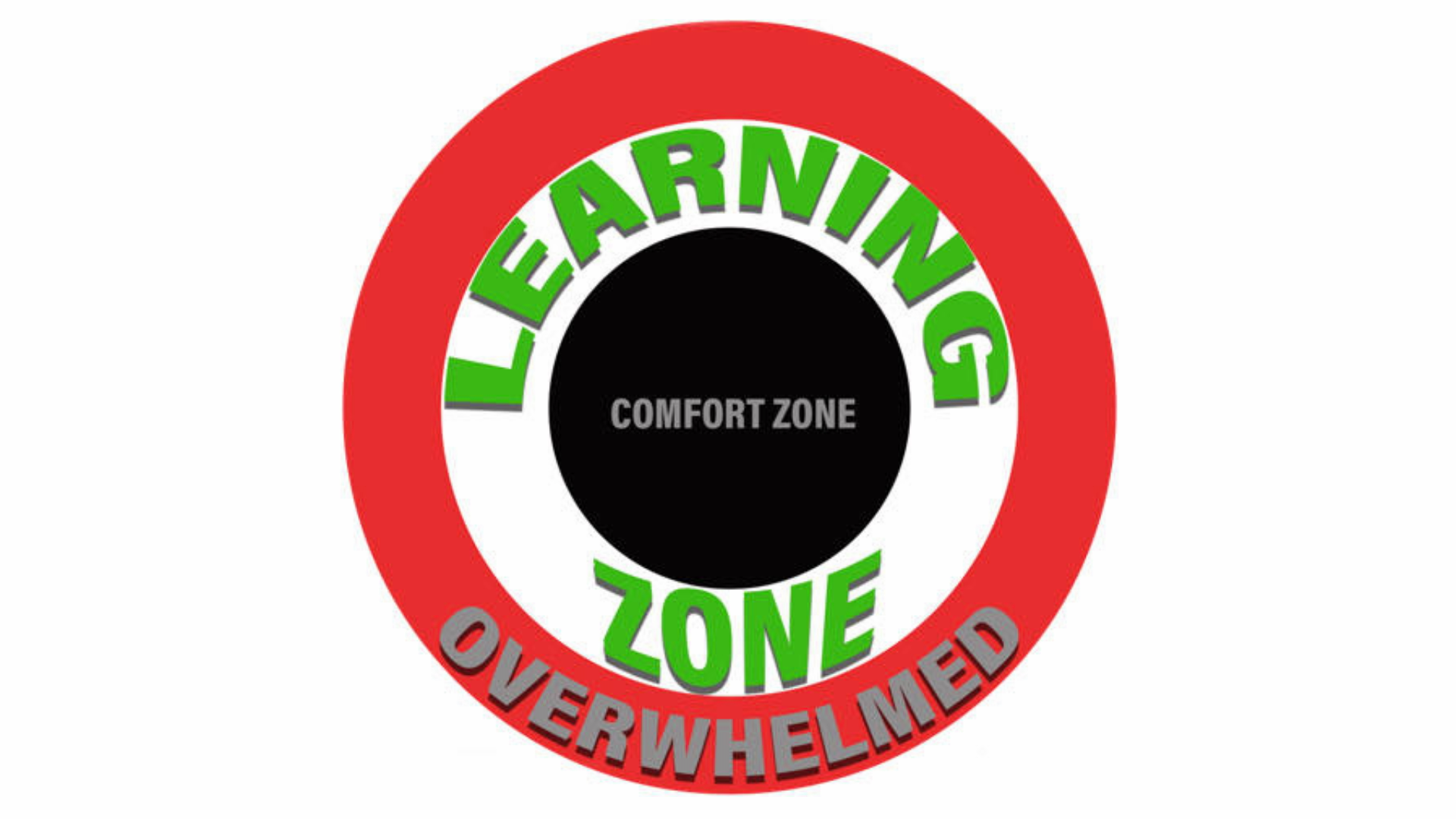
The answer began to crystallize when the Learning Zone model was formalized. Since at least 2010, this model operated as the cultural and operational framework at Midcourt Tennis Academy. Players understood development through three concentric zones:
Comfort Zone - Where patterns are automatic and pressure is absent. No active learning occurs here. This is where most players prefer to stay.
Learning Zone - Where discomfort is present but manageable. Where gaps are exposed but not overwhelming. Where growth happens. This is where development requires players to choose to be.
Overwhelmed Zone - Where stress exceeds capacity. Where the nervous system enters survival mode. Where no learning is possible, only surviving.
The distinction between these zones was not abstract. It was measured monthly through the Learning Zone Award. Players who consistently chose to stretch into productive discomfort rather than stay comfortable received recognition. Their names were added to a plaque. They received certificates documenting their choice to prioritize learning over comfort.
This was not motivational theater. It was systematic observation and reward of the exact behavior IEDE now trains. Players learned that development required deliberately operating in the gap between what they could do comfortably and what would break them. They learned that this discomfort was productive, not punishing. They learned to recognize when they were in each zone and make conscious choices about where to position themselves.
The Learning Zone model was the operational framework. It worked. Players developed faster. They transferred skills better. They showed independence earlier. But for years, the question remained: why did it work? What was the structure beneath the practice that made choosing discomfort produce lasting capability?
The competency wheel provides the answer.
The Four Stages of Competency
Competency development follows a predictable sequence. The model has been documented in education, psychology, and skill acquisition research for decades. Four stages describe the path from ignorance to mastery.
Unconscious Incompetence: You do not know what you do not know. You are unaware of the gap. You cannot see the skill or why it matters. This is the starting point for every new learner.
Conscious Incompetence: You recognize the gap. You see what you cannot do. You understand why it matters. But you cannot yet execute. This is the stage where most discomfort lives. Awareness without capability.
Conscious Competence: You can execute, but it requires focus and effort. You must think through each step. The pattern is not automatic. You are competent, but the competence is fragile and context dependent.
Unconscious Competence: The pattern is automatic. You execute without thinking about it. The skill has become baseline. It operates under pressure, across contexts, without conscious attention.
This progression is not optional. Every skill that becomes mastery moves through these stages. The question is whether the progression happens deliberately or accidentally. Whether it is guided or left to chance.
Most development systems try to skip stages. They attempt to move players directly from unconscious incompetence to unconscious competence. The coach demonstrates the correct pattern. The player imitates. The coach corrects. The player repeats. The assumption is that enough repetition will produce automaticity.
This approach fails because it skips conscious competence. The player never learns how to observe their own performance, diagnose their own errors, or extract their own insights. They become dependent on the coach to tell them what is wrong and what to fix. When the coach is not present, the player has no internal compass. Development stops.
IEDE refuses this shortcut. It forces every stage to be completed deliberately.
Why the Learning Zone Model Worked
The Learning Zone framework operated successfully for over a decade before the competency wheel explained why. The connection is direct.
Comfort Zone = Unconscious Competence (or Unconscious Incompetence)
When a player operates in their comfort zone, they are either executing patterns that have become automatic (unconscious competence) or avoiding challenges they cannot yet see (unconscious incompetence). Either way, no active learning occurs. The nervous system is not being tested. New patterns are not forming.
Learning Zone = Conscious Incompetence + Conscious Competence
This is where all development happens. The player recognizes gaps (conscious incompetence) and works to build understanding and capability (conscious competence). The discomfort comes from awareness without mastery. The player knows what they cannot do yet and focuses effort on closing that gap.
The Learning Zone Award measured who chose to operate here. Who set intentions that exposed gaps. Who competed at levels that tested them. Who stayed engaged with challenges that required focus and effort. This is the exact behavior IEDE systematizes.
Overwhelmed Zone = Threshold Breach
When pressure exceeds the player's tolerance, they cross from learning into survival. The nervous system shifts into fight or flight. Conscious processing degrades. No integration occurs. This is why tolerance matters. Players with low tolerance hit overwhelmed quickly. IEDE helps them recognize this pattern and gradually expand their learning zone through calibrated exposure.
The three-zone model was intuitive and measurable. Players could feel which zone they were in. Coaches could observe it. Parents could recognize it. The monthly awards reinforced the cultural understanding that growth required choosing discomfort.
The competency wheel explains the mechanics beneath that cultural practice. It shows why staying in the learning zone produces capability that transfers. Why comfort zone practice produces only temporary performance. Why overwhelmed zone exposure produces trauma instead of growth.
The practice came first. The theory came later. Both describe the same structure.
How IEDE Maps to the Competency Stages
The loop is designed to move the player through competency stages systematically. Each phase serves a specific function in the progression.
Intention: Entering Conscious Incompetence
Intention is where the player names what they do not yet know or cannot yet do reliably. It is the deliberate act of recognizing the gap. This is conscious incompetence.
Before IEDE, most players operate in unconscious incompetence. They compete without clear awareness of what they are testing. They assume they are working on everything. In reality they are working on nothing with precision. They do not see the gaps clearly enough to target them.
Intention forces the player to move from vague awareness to specific recognition. What exactly am I testing today? What threshold am I approaching? What pattern am I trying to stabilize? This is not motivational language. It is diagnostic language. The player must name the gap before they can address it.
This step is uncomfortable. Naming incompetence feels like admitting weakness. Most players resist it. They want to focus on what they do well, not what they cannot do yet. The system does not allow this evasion. It requires the player to state their developmental edge clearly and without decoration.
This is the first discipline IEDE teaches. The willingness to see yourself accurately. To recognize the gap without judgment. To enter conscious incompetence deliberately rather than accidentally.
Experience: Staying in Conscious Incompetence
Experience is where the player gathers data while remaining in conscious incompetence. This is the phase most systems rush through. They want the player to fix the problem immediately. IEDE does the opposite. It slows the player down and forces them to observe.
The player competes. Pressure arrives. The gap reveals itself. The player notices when the pattern breaks, how it breaks, what triggers the break. They stay in observation mode rather than jumping to solutions. They collect information without trying to solve the problem during the match.
This is hard. The instinct under pressure is to fix. To adjust. To problem solve in real time. IEDE constrains that instinct. The job during experience is not to perform perfectly. The job is to notice accurately.
This teaches the second discipline. The capacity to observe yourself under stress without collapsing into reaction. To stay present with discomfort long enough to gather clean data. To resist the impulse to fix before you understand what is actually happening.
Most players cannot do this. They feel pressure and immediately start changing things. They abandon patterns. They second guess. They operate from anxiety instead of observation. IEDE trains the opposite. It teaches the player to stay in the experience, feel the pressure, and observe what it reveals.
This is conscious incompetence under load. You know you cannot execute the pattern reliably yet. You stay with that reality long enough to understand it.
Debrief: Moving Toward Conscious Competence
Debrief is where the player begins building conscious competence. This is the phase where observation becomes understanding. Where data becomes insight. Where the player starts to see the structure beneath their own performance.
The player examines what they noticed during experience. They organize observations into patterns. They connect those patterns back to the intention they set. They identify what changed, when it changed, and what conditions preceded the change. This is active interpretation, not passive reception.
The coach does not tell the player what happened. The coach asks questions that help the player extract meaning from their own experience. What did you notice about your breath when pressure arrived? When did your tempo shift? What happened to your decision making after you lost serve?
These questions force the player to think. To construct their own narrative. To build their own model of what occurred. This is how conscious competence begins. Not through imitation. Not through instruction. Through interpretation.
The player who can accurately describe their own performance under pressure is developing conscious competence. They are learning to see the mechanics of their own behavior. They are building internal diagnosis. They are learning to think.
This is the third discipline IEDE teaches. The capacity to extract insight from experience without relying on someone else to do the extraction for you. To trust your own observations. To build your own understanding. To develop your own model of how you operate under stress.
Most systems do not teach this. They tell the player what happened and what it means. The player never learns to interpret their own experience. They become dependent on external diagnosis. IEDE reverses this. It positions the player as the primary interpreter of their own reality.
Evolution: Reaching Unconscious Competence
Evolution is where conscious competence becomes unconscious competence. This is the phase where insight integrates into baseline behavior. Where understanding becomes automatic. Where the pattern no longer requires conscious attention.
This cannot be rushed. Conscious competence must be practiced across many cycles, under varying conditions, before it becomes structural. The player must repeat the pattern enough times for the nervous system to internalize it. One cycle is not enough. One insight does not produce evolution. Only repetition across time creates baseline shift.
This is why Evolution requires longitudinal measurement. The player must track whether their tolerance threshold is moving, whether their fortitude depth is decreasing, whether their resilience speed is increasing, whether their adaptability is becoming structural. These changes happen slowly. They are only visible when measured over months.
But when they do happen, the result is unconscious competence. The player no longer thinks about the pattern. It executes automatically. It holds under pressure. It generalizes across contexts. It has become part of who they are, not something they have to remember to do.
This is the fourth discipline IEDE teaches. The patience to stay with one developmental target long enough for it to integrate. To resist the urge to chase novelty. To trust that repetition across time produces transformation that single insights cannot.
Most players abandon patterns before evolution occurs. They have a breakthrough in debrief, feel excited, test it once, and then move on to the next thing. The insight never integrates. Conscious competence never becomes unconscious competence. The baseline never shifts. They accumulate observations without accumulating capability.
IEDE prevents this. It tracks evolution explicitly. It measures baseline shift. It does not allow the player to mistake insight for integration. It holds them accountable to the only metric that matters: did the nervous system reorganize, or did the narrative simply change?
Why This Produces Independent Thinkers
The competency progression is not unique to IEDE. Every expert has moved through these stages. What makes IEDE different is that it makes the progression deliberate, systematic, and transferable.
Most people develop unconscious competence accidentally. They stumble through conscious incompetence without recognizing it as a stage. They reach conscious competence through trial and error. They achieve unconscious competence through years of repetition without understanding the structure beneath their own development.
IEDE makes the structure visible. The player learns how they learn. They see the stages. They understand the progression. They recognize that discomfort in conscious incompetence is normal, not failure. They learn that conscious competence requires focus and repetition. They understand that unconscious competence only emerges after many cycles.
Once the player internalizes this structure, they can apply it to anything. Learning a new skill in tennis. Learning a new subject in school. Learning a new capability in work. The loop is the same. The stages are the same. The disciplines are the same.
Intention teaches the player to recognize gaps without fear.
Experience teaches the player to gather data under stress.
Debrief teaches the player to extract insight from observation.
Evolution teaches the player that integration requires time and repetition.
These are not tennis skills. These are thinking skills. They are the foundation of lifelong learning. They are what allow a person to develop mastery in any domain without needing someone else to guide every step.
This is agency. The capacity to direct your own development. To see yourself clearly. To learn from your own experience. To improve systematically without external dependence.
The Difference Between Training Dependence and Training Agency
Most development systems are optimized for coach retention. They keep players dependent on external judgment so the coach remains necessary. This is not malicious. It is structural. The system rewards dependency because dependency generates recurring revenue.
But dependency prevents transfer. The player who cannot diagnose their own performance in tennis will not suddenly develop that capacity in other domains. The player who relies on a coach to tell them what went wrong will rely on managers, mentors, and advisors to do the same in their career. The pattern of external dependence becomes the baseline.
IEDE optimizes for transfer instead of retention. It deliberately trains the player to operate without the coach. This seems counterintuitive. Why would a system designed for development reduce the need for external guidance?
Because the goal is not to keep the player in the system forever. The goal is to teach the player how to learn so they can leave the system and continue developing on their own.
This is what independent critical thinking means. The capacity to run the IEDE loop internally. To set your own intentions. To observe your own experience under pressure. To debrief yourself honestly. To measure your own evolution. To continue developing long after formal training ends.
The player who masters IEDE does not need tennis. Tennis was the medium where they learned how to learn. Once they understand the loop, they can apply it anywhere. That is the real product. Not better tennis. Better thinking.
The Architecture Beneath the System
The competency stages are not new. The IEDE loop is not new. What is new is the deliberate mapping between them. The recognition that the loop forces progression through the stages in the correct sequence. The understanding that skipping stages produces dependency, while completing stages produces agency.
This is why IEDE works when other systems do not. It honors the structure of how humans actually develop mastery. It refuses shortcuts. It resists the impulse to move players faster than their nervous systems can integrate. It treats conscious incompetence and conscious competence as necessary stages, not obstacles to rush through.
The architecture is simple. Four stages. Four phases. One recursive loop that repeats until unconscious competence stabilizes. Then the loop begins again on the next developmental target. Always climbing. Always cycling. Always building capacity through deliberate progression.
This is not motivational language. This is system design. The loop works because it matches the mechanics of how learning actually occurs. The player who completes many cycles does not just improve at tennis. They internalize a method for developing mastery in anything.
The Progression: From Practice to Architecture
The lineage is visible now:
Practice (2001-2010): Bob Alexander shares a debrief document in Charlotte. Midcourt Tennis Academy develops it into a systematic framework. Players learn to reflect on competitive experience, set intentions, observe internal states, and extract insight. The outcomes validate the approach before the theory exists to explain it. Thai Kwiatkowski becomes 2017 NCAA Men's Singles Champion and Conference Scholar-Athlete of the Year across all sports. ReeRee Li becomes Yale team captain. The pattern is clear: the system produces independent critical thinkers.
Formalization (2010-2015): The Learning Zone Award system measures and rewards players who choose productive discomfort. Monthly recognition for operating in conscious incompetence instead of comfort. The three-zone model becomes cultural infrastructure. Players, parents, and coaches understand what is being measured. Three plaques at Midcourt Tennis Academy document 2011-2015. Individual certificates like Adith Balamurugan's (September 2010) show the precision of language. Dozens of players learn this framework as the foundation of their development.
Discovery (2010s-2020s): Through thousands of post-match conversations, player development plans, and observational cycles, the IEDE loop emerges. Intention before competition. Experience during pressure. Debrief in the window of accuracy. Evolution measured longitudinally. The pattern becomes visible through repetition.
Theory (2020s): The competency wheel provides the explanation for why both the Learning Zone model and the IEDE loop produced independent thinkers. Mapping the zones to competency stages reveals the mechanics. Conscious incompetence is not a problem to solve quickly. It is a stage to inhabit deliberately.
Architecture (2025): The full system crystallizes. IEDE as the engine. The competency wheel as the theoretical foundation. The Learning Zone model as the cultural framework. Court 4 and Founders Room as the environments. The three-perspective PDP process as the calibration mechanism. All pieces working together to solve the Alcott Dilemma: scaling individualized cognitive development without flattening it.
This is not startup invention. This is twenty-four years of practice crystallized into teachable, scalable architecture. The players who came through Charlotte and Midcourt are the early adopters who proved the model before it could be fully explained.
That is the real validation. Not theory. Practice. Not vision. Results. Not promise. Evidence.
Why This Matters Beyond Tennis
Youth sports programs optimize for performance. Rankings. Results. Wins and losses. The coach positioned as the source of improvement.
IEDE inverts this completely. It treats performance as the medium through which development occurs. The real outcome is whether the player is learning how to observe, interpret, extract insight, and integrate learning. Whether they are moving from dependence to agency.
Here's what makes this different: the system teaches players to recognize when they're avoiding challenge, when they're learning, and when they're overwhelmed. It trains them to calibrate their own development.
This matters because youth sports are temporary. The player will leave tennis. The coach will not follow them into college, career, or life. If the system only trained tennis skills, everything stops when tennis stops. If the system trained thinking skills, those skills transfer permanently.
The evidence extends across twenty-four years.
The Charlotte era (2001-2010) produced Thai Kwiatkowski, who became 2017 NCAA Men's Singles Champion while simultaneously being named Conference Scholar-Athlete of the Year across all sports. It produced ReeRee Li, who became team captain at Yale before moving through Google legal operations to NYU Law School.
The formalized Learning Zone Award system operated at Midcourt from 2010-2015. Players received monthly recognition for choosing to stretch into conscious incompetence rather than staying comfortable. Three plaques document five years of systematic measurement. The language was already precise: "In recognition of consistently stretching into your Learning Zone throughout the month of September, 2010."
The outcomes show divergent pathways that both validate the model. Pranav Kumar (April 2011 Learning Zone Award) won the B18s at Texas Junior Slam, played Division I tennis at Texas A&M, earned an MS in Finance from SMU, and won doubles at the M25K at Austin Tennis Academy in fall 2025. Thirteen years of continuous development across athletic, academic, and professional domains. Harper Santos (November 2013) is playing at University of Charleston. Marcela Lopez (April 2015) is playing at Oklahoma State. Michael Watson (September 2013) went to Colgate University.
These are consecutive names from the plaques, not selected success stories. NCAA champions. Ivy League institutions. Division I athletics. Graduate degrees. Professional competition. The capacity to continue developing more than a decade after the initial training.
The player who learned to set intentions will set intentions in new contexts. The player who learned to observe under pressure will observe under pressure in new domains. The player who learned to debrief honestly will debrief honestly when the stakes are higher than a match.
This is the true test of a development system. Not whether it produces champions. Whether it produces people who can develop themselves.
What This System Claims
For institutional partners and critics evaluating this architecture, here are the core claims:
IEDE trains agency, not compliance. The system moves players from dependence on external feedback to internal calibration. Every phase of the loop reinforces the player's capacity to observe, interpret, extract insight, and evolve independently. The Learning Zone model operationalized conscious incompetence as the target state. The IEDE loop provided the mechanism for extracting insight from that discomfort.
It maps to established competency development mechanics. The four-stage competency model has been documented across education, skill acquisition, and coaching literature for decades. IEDE did not invent this progression. It created a systematic loop that allows players to move through these stages deliberately rather than accidentally.
It was field-tested before it was named. The Charlotte era outcomes validated the framework before the theory existed to explain it. The Learning Zone Award system formalized the practice. The IEDE loop emerged from observation of what already worked. The competency wheel explained why it worked.
It is measurable over time. The Learning Zone certificates and plaques represent observable cultural infrastructure. Monthly recognition tied to specific behavior. Longitudinal tracking across years of development. Individual trajectories inside a repeatable pattern.
It transfers beyond the original domain. The player who internalizes IEDE applies it to academic challenges, professional development, leadership contexts, and new skill domains. The loop becomes internal infrastructure. Thai Kwiatkowski's simultaneous achievement demonstrates transfer. ReeRee Li's trajectory demonstrates transfer. Michael Watson's academic success demonstrates transfer. The capacity persists long after competitive tennis ends.
These claims are not theoretical. They are grounded in practice, documented outcomes, and systematic evolution from implicit coaching instinct to explicit teachable architecture.
The practice came first. In 2001, Bob Alexander shared a debrief document in Charlotte. The theory followed over two decades of systematic development. And the players who came through Charlotte and Midcourt Tennis Academy, whose names appear on three plaques, whose trajectories extend from junior tennis through NCAA championships, Ivy League institutions, Division I athletics, graduate school, and professional competition, are the living proof.
The architecture is built to last. Four stages. Four phases. One recursive loop. Simple enough to remember. Powerful enough to produce mastery. Transferable enough to apply anywhere.
The player leaves tennis. The loop does not leave the player.
That is the real outcome. Not trophies. Not rankings. Not scholarships. The capacity to develop mastery independently. The capacity to think critically under pressure. The capacity to learn from experience without needing someone else to extract the meaning.
The loop trains thinkers. Everything else is downstream.
Part I: Intention
Part II: Experience
Never Miss a Moment
Join the mailing list to ensure you stay up to date on all things real.
I hate SPAM too. I'll never sell your information.
